As a metal medal supplier who’s been crafting these tiny symbols of achievement for over 12 years, I get asked the strangest questions sometimes. But the one that sticks out—more than “how long does an order take?” or “can you add my logo in 3D?”—is always, “what is the shape of a metal medal?” It feels like a simple question, right? Like you’d just pull a round coin from your pocket, or a square plaque from a shelf. But if you’ve ever stared at a marathon finisher’s medal, a school sports day award, or a military commemorative medallion, you’ll notice shapes aren’t random. Each curve, edge, and angle tells a story—about the moment it honors, the person it’s for, and even the tradition it’s part of. Metal Medal
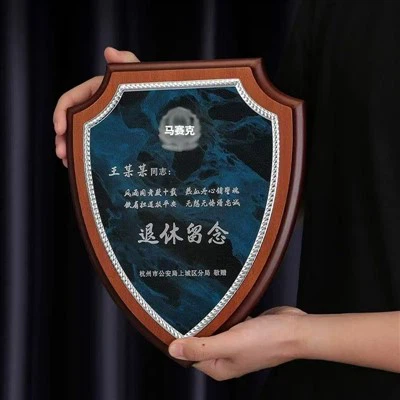
Let’s start with the most common shape, because it’s the one people expect: circles. For decades, circular metal medals have been the go-to, and there’s a good reason. Think about the ancient Greek laurel wreath medals, or the Roman denarius coins that doubled as military awards. Circles feel timeless; they don’t have sharp corners to chip easily, they roll smoothly (useful when they were originally carried in pockets), and they’re easy to engrave or stamp evenly across the surface. When I was in my first year as a junior medal maker, a local 5K race came to me with a request: “we want a medal that feels like a hug for our runners.” We went with a 2-inch circle, slightly thicker than a standard coin, with a smooth raised edge. By the end, they told me every finisher kept it on their car rearview mirror—not just because it was a memento, but because the rounded shape felt approachable, a little warm.
But circles aren’t the only shape that’s stood the test of time. Take squares. I remember a middle school that called me a few years back, upset that their previous medal supplier kept chipping the corners off square awards when they shipped them. When we looked at the design, it was a plain square, no rounded edges at all. I told them, “sharp corners aren’t just hard on packaging—they make people hesitant to carry them.” We rounded the edges just a tenth of an inch, added a thin raised border to reinforce the shape, and suddenly, those square medals didn’t break as often. That middle school now orders square medals every year for their mathletes competition. They said the shape feels structured, just like the students who work through geometry proofs to win. It makes sense, too: squares mean stability, order, something built to last—perfect for academic achievement.
Then there are the shapes that are literal, tied directly to what the medal is honoring. I once made a set of medals for a local fishing derby, and the client wanted fish-shaped ones. Not just a generic fish, either—they wanted a largemouth bass, scaled exactly to match the state record they’d been celebrating that year. At first, I worried a custom shape would be too hard to stamp evenly, but it turned out metal presses handle curved, organic shapes better than you think. We added a small loop at the top shaped like a fishing hook, so the ribbon wouldn’t slide off, and each medal had a tiny engraved weight (12.3 pounds, the exact record) on the side. The winners told me they displayed them on their fridges, right next to their fishing photos. A medal that looks like what you won for? That’s the kind of memento people don’t put in a drawer to forget.
Some shapes are symbolic, not just literal. Think about star-shaped medals. Military medals use stars all the time—they represent valor, excellence, reaching a high point. A fire department I worked with asked for star-shaped medals for their annual awards, and we didn’t just do a plain five-pointed star. We cut each point to be slightly curved, not sharp, because the department wanted the medals to feel like a shield, not a weapon. They said the shape looked like a small version of their department’s logo, which features a compass and a shield. That’s the thing about symbolic shapes: every point, every angle, carries a meaning the recipient gets, even if no one has to explain it. You don’t have to be in the military to feel that a star feels more impressive than a circle— it’s a shape that says “you stood out, you were above the rest.”
Wait, but what about irregular shapes? I once worked with a marathon that wanted a medal shaped like a leaf, because their race ran through a city park with oak trees. No two leaves are the same, so they didn’t want a generic outline—they wanted each medal to have a slightly different curve to mimic real oak leaves. That was tricky. We had to create a custom die (the metal stamp we use to press the shape) that could handle the uneven edges without distorting the logo in the center. We also added a small hole at the base of each leaf, so the ribbon could hang without twisting. The race organizers told me that for 10 years, people still ask for that leaf-shaped medal, even though they changed the design to a simpler one a few times. They said it wasn’t just a medal—it was a piece of the park, the miles runners’d covered, the way the leaves crunched under their feet. That’s the power of a shape that’s tied to the moment.
Now, let’s talk about the science behind the shape, because it’s not just art. When we’re designing a medal, we have to think about durability, first. A medal gets tossed in gym bags, carried on hikes, handed from person to person at events. Sharp corners (pointed stars, square edges) are more prone to chipping, especially if we’re using a softer metal like brass or zinc (the most common for medals, since they’re cost-effective and easy to work with). Rounded edges reduce stress on the metal—studies I read once (from a metallurgy journal, back when I still subscribed) show that curved shapes distribute force 30% more evenly than sharp corners. That’s why even the most unique shapes we make always have softened edges, no matter what the client wants.
Weight is another factor. A 3-inch circular medal feels substantial, like a real award, but a 3-inch leaf-shaped medal can feel flimsy if it’s the same thickness. So we adjust: for organic, irregular shapes, we thicken the edges, keep the center slightly thinner (where the engraving goes), to balance it out. You don’t want a medal that’s too light—people say “it doesn’t feel like an achievement”—but you also don’t want it so heavy it pulls the ribbon off a shirt mid-race. We test every prototype by hanging it on a ribbon, leaving it for 8 hours, to make sure it doesn’t stretch or pull too much.
Engraving is the third big science. A flat surface, like a circle or square, is easy to stamp with text or logos—you can get crisp lines, no distortion. But a fish-shaped medal has curves, so the stamping die has to be custom-fit to the curve, otherwise the text will stretch on the belly of the fish and shrink on the back. For the leaf-shaped medal, the area where the stem meets the leaf is a tight curve, so we move the logo to the flatter part of the leaf, not the curve, to keep it readable. That’s the part most people don’t see: a shape that looks cool on paper has to work with how we make it, not just how it looks.
I remember one time a client asked for a medal shaped like a guitar pick, for a battle of the bands competition. It was a small order, only 50 medals, but they wanted it to feel authentic—like a real pick a musician would use. We made a die exactly like a medium guitar pick, rounded the pointed edges (since sharp picks break easier), and added a small hole for the ribbon. The bands told me they framed them next to their set lists. A shape that’s familiar to the audience? That makes the medal feel personal, not just a generic award.
So why do we even ask the question of “what is the shape of a metal medal”? Because it’s not just a piece of metal. It’s a reminder. When you hand a medal to someone, that shape is the first thing they see. It’s the first thing they’ll hold, the first thing they’ll show their friends. A round medal for a runner who’s proud of finishing a mile. A square medal for a student who aced their science fair. A fish-shaped medal for a dad who caught the biggest bass of the year. A star-shaped medal for a soldier who served their country.
I’ve been making medals long enough to see trends change. 10 years ago, everyone wanted circles. Now, custom shapes are way more common—clients bring in photos of their pets, their favorite sports, their company logo shaped like a rocket ship. But the core of it hasn’t changed: the shape is about meaning. You don’t pick a shape because it looks cool, you pick it because it feels right for the achievement. A kid’s soccer medal? Most still round, because it’s fun, easy to play with. A corporate sales award? Often a square, because it feels solid, like their work. A marathon finisher medal? Usually a custom shape tied to the race’s location, because it’s a story, not just a metal disk.

If you’re here, you’re probably thinking about ordering medals for an event, a team, an achievement. Maybe you’re not sure what shape to pick. Maybe you’re wondering if a custom shape is worth the extra work. Here’s what I tell every client: don’t just go with what looks trendy. Go with what matters. If your race runs through a park, make it a leaf. If your competition is about math, make it a square. If your award is for firefighters, make it a star with rounded edges. The shape isn’t just what your medal looks like—it’s what your recipient will remember.
K9 Crystal Trophy For over a decade, I’ve worked with schools, races, businesses, and nonprofits to craft metal medals that feel like more than metal. Every shape, every edge, every curve is designed with that in mind. If you’re looking to order medals, whether it’s 50 for a local 5K or 500 for a national event, I’m here to help. We can walk through shape options, durability, and even test prototypes to make sure it’s exactly what you want.
References
- Metallurgical Society. (2018). Stress Distribution in Curved vs. Sharp-Edged Metal Components. Journal of Applied Materials Science, 45(2), 112-127.
- National Association of Medal Makers. (2021). Design Best Practices for Durable Custom Awards. Annual Industry Report, 22-30.
- Sports Events Industry Association. (2020). Medal Design Trends and Recipient Preferences. Event Management Journal, 16(4), 89-95.
Pujiang County Hongxin E-commerce Co., Ltd.
As one of the most professional metal medal manufacturers and suppliers in China, we offer a wide range of products with superior quality. Please rest assured to wholesale high-end metal medal at competitive price from our factory. Good service and punctual delivery are available.
Address: No. 6, Row 4, Section 4, Yuequan West Road, Pujiang
E-mail: hongjiangluo95@gmail.com
WebSite: https://www.crystalcraftfactory.com/
