If you’ve ever browsed industrial automation sites or looked into sensor technology for consumer electronics, you’ve probably seen “detector modules” thrown around—and maybe also wondered something I hear a hundred times a week: Can these compact, pre-calibrated hardware pieces actually connect to other devices, or are they stuck working alone? As a detector module supplier with 12 years in the game, I’m here to pull back the curtain on that question, because the answer isn’t just yes—it’s the backbone of almost every smart system you interact with every day. Detector Module

First, let’s ground this in what a detector module actually is, because that’s where a lot of the confusion starts. To the uninitiated, it’s not some black box that only spits out a blip of data. It’s a self-contained unit that includes a sensor core (the part that detects light, gas, motion, temperature, whatever), signal processing circuitry, and often basic output logic to turn raw, noisy readings into usable data. But the magic—and the utility—hits when that module talks to other devices.
Let’s break down the most common, practical connections our clients use, because I’ve walked them through every single one over the years. The first and most ubiquitous is wired connectivity. The workhorses here are UART (Universal Asynchronous Receiver/Transmitter), I2C (Inter-Integrated Circuit), and SPI (Serial Peripheral Interface) for short-range, on-board or local connections. For example, we recently shipped a batch of our industrial gas detector modules to a food processing plant that’s monitoring ammonia leaks in cold storage warehouses. Each module connects to a local PLC (Programmable Logic Controller) via Modbus RTU over RS-485, a wired protocol built for long, noisy industrial cables. The PLC aggregates data from 20+ modules across the facility, triggers alarms if levels get too high, and logs everything to a central HMI (Human-Machine Interface) that’s visible to plant managers. Without that wired connection, the module would be a standalone leak detector with no way to alert anyone or feed into safety protocols.
Then there’s wireless connectivity, which exploded over the last decade as IoT took off. A lot of our newer detector modules integrate Bluetooth Low Energy (BLE), Wi-Fi, or LoRa (Long Range) for remote connections. Take the environmental sensor modules we supply to smart agriculture clients: farmers mount our soil moisture and pesticide detector modules across 100-acre fields, and the LoRa-enabled modules send readings to a central gateway that relays data to their phones or cloud dashboards. We had a client in Iowa tell us this cut their water usage by 22% last growing season—something they never could have done if the modules couldn’t connect to their farm management software wirelessly. BLE is more for short-range, portable use: our indoor air quality detector modules for office buildings connect via BLE to building maintenance tablets, so techs can walk around, pull readings, and calibrate modules without hardwiring each one.
But here’s something I always make sure new clients understand: connecting a detector module isn’t just about slapping on a Wi-Fi chip. It’s about compatibility, and that’s where our team adds the value that makes us different from generic module suppliers. For example, a customer might come to us with an existing system that uses a specific protocol, like CAN bus for automotive applications. They have a custom in-vehicle sensor network, and they want our crash impact detector modules to plug right into that. We don’t just send them a module with a random UART output; we customize the firmware to translate our module’s raw data into the exact CAN frame format their existing ECU (Electronic Control Unit) expects. Last year, we worked with an EV manufacturer to integrate our thermal runaway detector modules into their battery management system, and that required rewriting the module’s signal processing logic to align with their CAN bus timing specs—something that would have been impossible if the module couldn’t communicate with their existing device network.
Of course, there are limits, and I’m not going to sugarcoat that. Detector modules are designed for specific form factors and power budgets, so trying to connect them to devices way outside their intended ecosystem can cause issues. For example, our tiny, coin-cell-powered PIR motion detector modules for battery-powered wearables can’t connect to high-power industrial PLCs without an intermediate adapter, because their voltage and communication protocols don’t align. I always tell clients to come to me with two things: what their detector module needs to do, and what other devices it has to work with. That way, we can either standardize the module to fit or recommend the right bridge component to make the connection seamless.
A common myth I hear is that detector modules are just add-on parts that any engineer can plug and play. While some basic modules do work out of the box with off-the-shelf devices, most real-world applications need integration—That’s where our role as a supplier goes beyond shipping a part. Last quarter, a startup building a smart home leak detection system came to us with a prototype that used a generic water leak detector module, but it kept failing because the module wouldn’t sync with their home Wi-Fi router’s 5GHz band, and their firmware couldn’t parse the module’s data. We reflashed the module’s firmware to work with their 2.4GHz Wi-Fi, developed a small custom adapter board to handle the protocol translation, and walked their engineering team through the setup in a 30-minute call. Within two weeks, they had a pilot unit installed in a test home. That’s the kind of support that only comes from a supplier that knows both detector modules and the devices they connect to.
Another area I get asked about is edge computing: many modern detector modules now have built-in processing, so they don’t just send raw data to other devices—they can send processed insights. For example, our camera-based object detector modules for retail security can connect to a store’s POS system, and instead of sending every single frame of footage (which would take up too much bandwidth), they send only the count of customers and shoplifting events. That makes the connection not just functional, but efficient, which is critical for devices with limited bandwidth or processing power.
I want to be clear too: this isn’t a new trend. When I started in this industry 12 years ago, 70% of our detector modules were sold as standalone units. Today, that number is flipped—70% go into systems that require connection to other devices, whether that’s a cloud server, a PLC, a smartphone, or another sensor. It’s not just about convenience; it’s about safety, efficiency, and innovation. A standalone gas detector only alerts the person holding it. A connected detector module sends an alert to safety teams, locks down a facility, and logs the incident for OSHA reports. That’s the difference between a part and a solution.
If you’re reading this and you’re an engineer, facility manager, or product developer working on a project that uses detector modules, don’t assume you have to make them work alone. The connection is possible, but it requires the right module, the right protocol, and the right support. I’ve seen too many projects get delayed because teams bought a generic module that didn’t play nice with their existing devices, or tried to hack a connection that never should have worked in the first place. As a supplier, my job isn’t just to sell you a detector module—it’s to help you make it work for your system, whatever that system is.
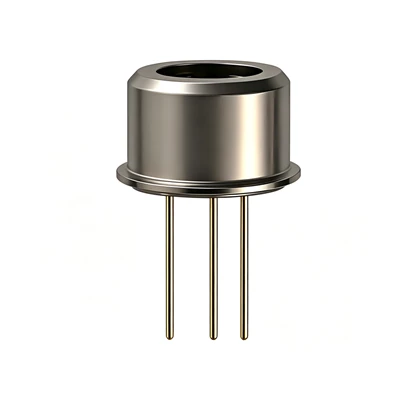
Whether you’re building a smart industrial safety system, a new consumer wearable, an agricultural IoT setup, or anything in between, the question isn’t “can a detector module connect to other devices?” It’s “how do I connect mine?” That’s where we come in. We offer a range of standard detector modules with wired and wireless connectivity options, and we work with every client to customize firmware, protocols, and adapters to fit their specific devices and use cases. If you’re ready to stop treating your detector module like a standalone part and start integrating it into a smarter, more functional system, reach out to our team to discuss your requirements and get a customized solution tailored to your project.
LED Module References:
- Bolton, W. (2015). Instrumentation and Control Systems (2nd ed.). Newnes.
- Weber, R. (2021). IoT for Industrial Automation: Protocols, Security, and Applications. CRC Press.
- Texas Instruments. (2022). MSP430 Bluetooth Low Energy Module Integration Guide. Texas Instruments Incorporated.
- International Society of Automation. (2020). Standard for Industrial Communication Protocols (ISA-95). ISA.
- Zhang, Y., & Wang, H. (2023). Wireless Sensor Networks for Smart Agriculture: Design and Deployment. IEEE Transactions on Industrial Informatics.
UVLEDTEK Group
As one of the most professional detector module manufacturers and suppliers in China, our products have good reputation in the market. Please rest assured to buy high quality detector module at competitive price from our factory. For more information, contact us now.
Address: Huangshi Industrial Zone, Putian City, Fujian Province, China
E-mail: info@uvledtek.com
WebSite: https://www.uvledtek.com/
