Hey everyone, if you’ve ever spent time around a snooker table, you know how crucial the cue is—like, it’s basically an extension of your arm. But here’s the thing: a lot of players (even some regulars) don’t think twice about how they store it between shots, after a session, or when they’re not using it for months. As a snooker table supplier, we get so many questions about this, and honestly, it’s one of those small habits that makes a huge difference in cue lifespan and performance. Let’s break this down like we would with a regular at our shop—no fancy jargon, just real stuff that works. Snooker Table

First off, let’s talk about what a snooker cue is made of, because that’s why storage matters. Most good cues have a shaft (the thin part you hold) made of North American maple or ash, and a butt (the thick, weighted part) with things like ebony, rosewood, or even synthetic materials for durability. Wood is organic— it breathes, expands, contracts, and reacts to humidity and temperature. If you store it wrong, that wood can warp, crack, or develop “shaft dip” (that little bend in the middle that messes up your aim) way faster than it should. We’ve seen cues come back to our shop with dents, warps, or even splits just because someone leaned them against a wall, propped them under a chair, or left them in a hot car overnight. Total bummer, especially after someone saved up for a custom cue.
Let’s start with the worst storage mistakes to avoid, because that’s easier to remember first. Number one: never leave a cue leaning directly on a hard surface—like a concrete floor, a metal table leg, or even a wooden wall. If it’s leaning, all the weight of the cue is pulling on one side. Over time, that makes the shaft bend slightly (warp) from constant pressure. Second, don’t store it in a cramped space, like the back of a crowded closet where it’s got nowhere to hang straight. If it’s forced into a bent position, that’s a surefire way to get a permanent warp. Third, extreme temperatures and humidity are the enemy. If you leave a cue in a car that’s baking in the summer sun, the wood will dry out and shrink, which can cause the shaft to crack. In winter, if you’re heating a room super dry, same thing—wood loses moisture too fast. If it’s too humid, the wood swells, which can make the shaft feel thick and less responsive, or even cause the joint (where the shaft meets the butt) to stick. And don’t even get me started on leaving it near a radiator or in a damp basement—those are instant damage zones.
Now, what’s the right way to store a cue, based on what we’ve learned from pro players we work with and years of replacing damaged cues for our customers. Let’s split this into two main scenarios: storing it after a casual session (so you’re just putting it away for a few hours or a day) and storing it long-term (like if you’re a venue owner with multiple cues, or a player who’s not using their cue for weeks or months).
For casual storage—after a game at a club, a friend’s house, or your home table—your best bet is a cue rack, the wall-mounted kind or even a floor-standing one that holds each cue individually. Wait, not just any rack—look for one with individual slots that hold the cue horizontally, not leaning, and that support the entire length of the cue, especially the shaft. A lot of cheap racks have big, wide slots where the cue tilts, which is basically the same as leaning it against a wall. The good ones (we sell these, by the way) have soft rubber inserts in each slot, so the cue doesn’t scratch or get dented, and they hold it straight. If you don’t have a rack right now, what’s a quick fix? Don’t just set it on the table—lean it in the corner of the room, but prop both ends up. Like, put the butt end on a small stand or a stack of books, and the tip end on another stack, so the whole cue is straight, no bending. That’s way better than leaning it on one side. One pro tip we tell our regulars: never leave your cue lying on the snooker table itself. The table’s surface is felt, but the weight of the cue (especially if you set it on the shaft) can leave a crease in the felt over time, which messes up ball roll. Yep, that’s another thing we deal with—people ruining table felt because of bad cue storage.
Now for long-term storage—this is big for venues, home gamers who go away for a while, or anyone with a collection of cues. First, clean the cue before you put it away. Sweat and oil from your hands (especially the butt) can build up on the wood, which attracts dust and even mold if it’s stored damp. Use a soft, dry cloth to wipe down the shaft and butt, and if there’s a sticky spot, a tiny bit of furniture polish (not too much—you don’t want it greasy) works. Then, make sure the cue is fully disassembled? Wait, no—wait, some people say to take the shaft off the butt for long-term, which makes sense because the joint is a delicate part. If you leave it together, the two parts are constantly connected, and if there’s any slight moisture there, it can cause the metal joint to rust or the wood to stick. Taking it apart gives you a chance to check the joint too—wipe it with a dry cloth, make sure there’s no grit or old chalk stuck in there, which can make it hard to screw together next time.
Next, climate control is key for long-term storage. Your cue likes a consistent temperature—between 60 and 75 degrees Fahrenheit (that’s like 15 to 24 Celsius) —and humidity around 40 to 50%. Most people don’t have a hygrometer (that thing that measures humidity) lying around, but a quick test: if your skin feels dry and you need lotion, the humidity is too low; if your windows are foggy when it’s cold outside, it’s too high. If you’re storing cues in a closet, add a small desiccant packet (the ones that come in shoe boxes or electronics, just make sure they’re dry) to absorb extra moisture. Don’t store them in the attic or basement—attic gets too hot and dry in summer, basement is too damp. The best spot is a cool, dry closet on an upper level, or a dedicated storage box made for cues. Wait, cue cases! A lot of people use hard cue cases for travel, but they’re also great for long-term storage if you stuff a little tissue paper inside to keep moisture out, and leave the case unzipped a tiny bit so air can circulate. If you zip it all the way shut, that traps moisture, leading to mold on the shaft or butt.
Let’s also talk about the parts you might not think about—like the tip and the shaft. The tip is made of leather, right? If you store the cue with the tip touching anything (like the wall, or another cue’s shaft), it can get squished or even tear. That’s why good racks or cases have little holders for the tip so it’s off the surface. Also, chalk: if you have chalk on your tip when storing it, it’s okay, but don’t leave loose chalk in the case with the cue—it can scratch the shaft. If you’re storing it long-term, you might even want to cover the tip with a tip protector (those little plastic caps) to keep it from getting scuffed.
Now, as a snooker table supplier, we’ve tested a lot of storage methods over the years, and we know what works best for both home users and commercial venues. For venue owners, we recommend installing wall-mounted cue racks near each table—so players can put their cues away right after their game, no leaning them on chairs or the bar. We even have custom racks that match our table finishes, so they look good in the room too. For home gamers, if you have a home snooker table, a floor-standing rack is easy—you don’t have to drill holes in the wall, and it keeps all your cues organized in one spot.
Wait, let’s address a common question we get: “Can I store my cue horizontally in a case if I’m not using it for a few weeks?” Yeah, that’s totally fine—just make sure the case is not in a hot place, and leave a little air flow. The only time horizontal is bad is if it’s crammed into a tight space where it’s bent, but a good hard case is sturdy enough to hold the cue straight. Also, avoid storing cues near other heavy items—like a stack of books or a toolbox—because if something falls, it can dent the cue’s shaft.
Another mistake we see: players leaving their cues in their car trunk overnight, especially in the spring or fall when temperatures swing a lot. One week it’s 80 degrees during the day, 50 at night, and that rapid change makes the wood expand and contract super fast, leading to warping. We had a customer last year who left his $300 cue in his trunk for a weekend trip, and when he took it out, the shaft was so bent he had to replace it. Total waste, and it would’ve cost nothing to bring it inside.
What about cues that have different materials? Like carbon fiber shafts, which are getting popular now. Do they need different storage? A little less, because carbon fiber doesn’t warp as easily as wood, but it still reacts to extreme temperatures. And the butt might still be wood, so same rules apply for humidity—you don’t want the wood part swelling or shrinking. So even if you have a high-end carbon fiber cue, the storage basics still stand.
Let’s wrap this up with quick checklists, because people love bullet points. For casual storage (after a game, <24 hours):
- Use a cue rack with individual, straight slots (no tilting)
- If no rack, prop both ends on flat surfaces so the cue is completely straight
- Never lean against a wall, table leg, or chair
- Don’t leave on the snooker table (ruins felt creases)
- Keep off the floor to avoid dents or moisture
For long-term storage (weeks/months):
- Disassemble shaft and butt, wipe both with a dry cloth to remove oil/dust
- Clean the joint, remove any chalk or grit
- Store in a cool, dry spot (60-75°F, 40-50% humidity) — avoid attics, basements, cars
- Use a hard cue case, leave unzipped ¼ inch for air flow; add desiccant if needed
- Put a tip protector on the shaft to prevent scuffs
- Don’t stack anything on top of the case to avoid dents
And here’s a little bonus tip from us: every 3-6 months, take your cue apart and check the shaft for warping. How? Roll it on a flat table (not the snooker felt—use a hard tabletop) and see if it wobbles. If it does, you might need to straighten it (don’t worry, it’s a thing cue makers do) or adjust how you’re storing it. A quick weekly check takes 10 seconds and saves you from a $100+ repair.
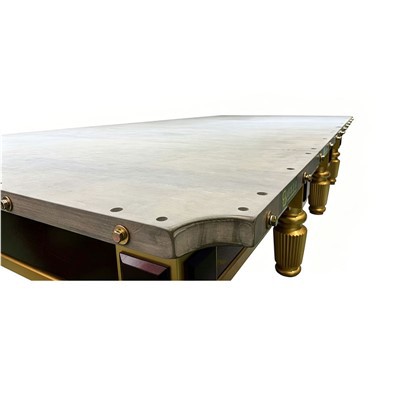
At the end of the day, storing a snooker cue is all about respect for the tool that helps you play. It’s not just about keeping it nice—it’s about making sure every shot feels the same, no warped shaft throwing off your aim, no stuck joint messing up your setup. If you’re a venue owner looking to outfit your space with quality cues and storage solutions, or a home gamer who wants to keep their cue in top shape, we’re here to help. We’ve been supplying snooker tables and accessories for years, so we know exactly what works for both casual players and pros. If you’ve got questions, or you’re ready to pick up a rack or some cue care supplies, don’t hesitate to reach out to us to discuss your needs. No pushy sales stuff—just solid advice from people who love snooker as much as you do.
Bluestone Slab Steps References:
- World Professional Billiards and Snooker Association. (2022). Equipment Care Guidelines for Snooker Cues. WPBSA Official Handbook.
- Cue Maker’s Association of North America. (2021). Wood Cue Maintenance and Storage Best Practices. Annual Industry Report.
- International Billiards and Snooker Federation. (2020). Venue Equipment Storage Standards for Cues and Tables. IBSF Technical Manual.
- The Wood Database. (2019). Properties of Maple and Ash for Snooker Cue Shafts. Wood Science Journal.
- Professional Snooker Players Association. (2023). Player Interview Series: Cue Care Habits of Top Ranked Athletes. PSBA Player Insights.
Yushan Hengshuo Mining Co., Ltd.
As one of the most professional snooker table manufacturers and suppliers in China, we also support customized service. Please feel free to buy high quality snooker table at competitive price from our factory. For quotation, contact us now.
Address: No. 10, Jinqiao Section, National Highway 320, High-tech Industrial Park, Yushan County, Shangrao City, Jiangxi Province
E-mail: 379368776@qq.com
WebSite: https://www.hengshuoslate.com/
