If you’ve ever stepped into a lab, a manufacturing plant, or even a pool maintenance supply shop, you’ve likely encountered inorganic bases—those powerful, workhorse chemicals that hold entire industries together. As someone who’s spent the last 12 years supplying high-quality inorganic acids and bases, I’ve lost count of how many times customers have asked me: “What makes a strong inorganic base, anyway?” It’s a question that sounds simple on the surface, but dig a little deeper, and you’ll find it’s a topic that balances basic chemistry, real-world application, and the fine line between safe handling and impactful use. Today, I want to break this down not just as a supplier, but as someone who’s spent years matching the right base to the right job, and learning why understanding these chemicals matters as much as getting the pH right. Inorganic Acids & Bases
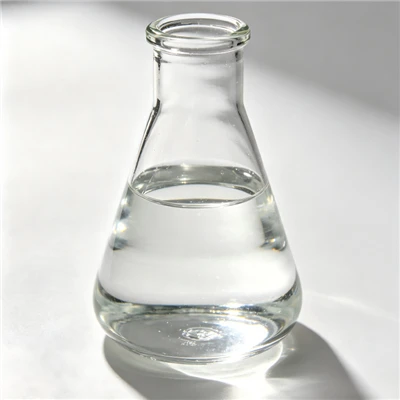
First, let’s get the basics out of the way, no stuffy textbook jargon required. An inorganic base is a compound that releases hydroxide ions (OH⁻) when dissolved in water, right? Wait, actually, there’s a little more nuance—Brønsted-Lowry bases are proton acceptors, and Lewis bases donate electron pairs, but for the sake of practicality, when we talk about strong inorganic bases, we’re mostly referring to those that dissociate completely in aqueous solution to produce a high concentration of OH⁻. That full dissociation is what separates a strong base from a weak one. A weak base, like ammonia (NH₃), only partially reacts with water, leaving most of its molecules intact, so it doesn’t raise pH as sharply. A strong base, on the other hand, splits apart 100% when mixed with water—every molecule of the base gives up its OH⁻, resulting in a high, stable pH. That’s the core definition, but let’s be clear: not all strong bases are created equal. Some are monobasic (like sodium hydroxide, which gives one OH⁻ per molecule), some are dibasic (like calcium hydroxide, which gives two), and that difference changes how they perform in different tasks.
Now, let’s talk about the heavy hitters—the strong inorganic bases that our customers come to us asking for, again and again. The first and most common is sodium hydroxide (NaOH), better known as caustic soda or lye. If you’ve ever made soap from scratch, you know caustic soda is non-negotiable; it’s the key to saponifying fats into soap. If you work in wastewater treatment, it’s what you use to adjust pH and neutralize acidic industrial runoff. If you’re in the paper and pulp industry, it’s part of the delignification process that turns wood chips into pulp. What makes NaOH so strong? When it dissolves in water, it dissociates completely into Na⁺ and OH⁻, so even a small amount can push pH to 14—among the highest possible pH values for aqueous solutions. It’s also highly soluble in water, which means you can make solutions of almost any concentration, from 10% to 50% (our team regularly mixes custom blends for customers with specific process needs). I’ll never forget a call I got from a small-scale biodiesel producer three years ago; they’d been struggling with inconsistent NaOH purity from a local supplier, which was causing their biodiesel to fail regulatory tests. We sent them a batch of our reagent-grade NaOH, and within a month, their yield went up 12%. That’s the kind of impact a consistent, high-quality strong base can have.
Next up is potassium hydroxide (KOH), or caustic potash. At first glance, it’s similar to NaOH—also a Group 1 alkali metal hydroxide, also strong, also fully dissociates in water—but it has a few key differences that make it irreplaceable for certain jobs. KOH is more soluble in alcohol than NaOH, which is why it’s the go-to base for making liquid soaps, liquid fertilizers, and even certain types of food additives (think the lye used to pretzel dough for that shiny, crispy crust). It’s also the base used in alkaline batteries, where its high conductivity and stability at high pH make it far more effective than sodium hydroxide. A few months ago, we partnered with a battery components manufacturer that was switching from sodium to potassium hydroxide because their new battery design required a base that wouldn’t crystallize at low temperatures. KOH was exactly what they needed, and we worked with their engineering team to deliver bulk shipments that met their strict purity specs. It’s also worth noting that KOH is just as strong as NaOH—its pKa (a measure of base strength) is around 15, same as NaOH—so it’s not weaker, just different.
Another staple is calcium hydroxide (Ca(OH)₂), commonly called slaked lime or hydrated lime. This one’s a little different from the Group 1 bases (NaOH and KOH) because it’s a Group 2 hydroxide, meaning it’s dibasic—each molecule releases two OH⁻ ions when it dissociates. That might sound like a minor detail, but it’s a big deal for applications where you need a base that’s strong but also less caustic than NaOH or KOH. For example, in water treatment, slaked lime is used to raise pH, soften hard water, and remove heavy metals like lead and arsenic. It’s also a key component in construction, where it’s mixed with sand to make lime mortar, and in agriculture, where it’s used to neutralize acidic soil. Unlike NaOH, which is highly corrosive to skin and metal, Ca(OH)₂ is a milder strong base—you can handle it with basic PPE without the same level of risk, which makes it a favorite for large-scale outdoor applications where safety is a top priority. I once worked with a municipal water utility that was switching from soda ash to slaked lime because they needed a base that wouldn’t overcorrect pH in their reservoir. The dibasic nature of Ca(OH)₂ meant it released OH⁻ more gradually, so their pH levels stayed consistent year-round, saving them thousands of dollars in chemical overuse.
Then there’s lithium hydroxide (LiOH), the underrated strong inorganic base that most people don’t think about, but which is critical for aerospace and advanced battery applications. Like NaOH and KOH, it’s a Group 1 hydroxide, fully soluble in water, and strong, but it has a lower molecular weight, which means it’s ideal for applications where weight is a constraint. NASA used LiOH on the Apollo missions to remove carbon dioxide from the air inside the command module—each canister of LiOH could absorb CO₂ for days, which was essential for keeping astronauts breathing during their trips to the moon. Today, LiOH is a key component in high-energy-density lithium-ion batteries used in electric vehicles and portable electronics. We supply LiOH to a few advanced battery startups, and one thing that stands out about this base is how sensitive its purity is. Even trace amounts of impurities can reduce battery lifespan by 20% or more, so our team has strict quality control checks at every stage of production—something that’s non-negotiable for our aerospace and battery customers.
Now, let’s address a common misconception: people often lump all Group 1 and Group 2 metal hydroxides into “strong inorganic bases,” but that’s only part of the story. For example, strontium hydroxide (Sr(OH)₂) and barium hydroxide (Ba(OH)₂) are also strong bases, but they’re less common because they’re more expensive and less soluble than the ones I mentioned above. They do have niche uses—Ba(OH)₂ is sometimes used to make barium salts, and Sr(OH)₂ is used in some lubricants and plastic stabilizers—but for most industrial and lab applications, the four I’ve covered (NaOH, KOH, Ca(OH)₂, LiOH) are the workhorses.
But here’s the thing about working with strong inorganic bases: their strength is both their greatest asset and their biggest risk. A strong base can dissolve grease, neutralize acids, and catalyze reactions in ways weak bases can’t, but they’re also highly corrosive. NaOH can cause severe chemical burns if it comes into contact with skin, and even Ca(OH)₂ can irritate the eyes and respiratory system if not handled properly. That’s why at our company, we don’t just sell chemicals—we provide technical support, safety training, and custom blending to make sure our customers use these bases safely and effectively. Last year, we hosted a webinar for a group of small manufacturing plants on proper storage and handling of caustic soda, and we heard from several attendees that it prevented them from a potential accident. That’s the part of our job that I care about most: not just moving product, but making sure our customers get the most out of the chemicals they rely on, without putting their teams at risk.
Another point that’s often overlooked: the purity of a strong base can make or break a process. If your NaOH has trace amounts of sodium chloride or iron, it can contaminate your final product, whether that’s a pharmaceutical, a food additive, or a battery component. That’s why we test every batch of our inorganic bases for purity—our reagent-grade NaOH is 99.9% pure, and our industrial-grade is consistently above 98%, with strict limits on heavy metals and other impurities. We’ve had customers come to us after getting a bad batch from another supplier that ruined a $50,000 production run, and our job is to make sure that never happens again.
Let’s also talk about how these bases are evolving. As industries like electric vehicles, renewable energy, and sustainable manufacturing grow, the demand for high-purity, custom-formulated strong inorganic bases is skyrocketing. For example, as more companies shift to biodiesel and green chemistry, they need bases that are not only strong but also environmentally friendly, with low levels of byproducts. Our team has been working on a line of low-chloride NaOH for biodiesel producers, which reduces salt buildup in their processing equipment and cuts down on waste. We’re also developing custom blends of Ca(OH)₂ for soil remediation, which helps neutralize acidic industrial soil without introducing harmful chemicals.
At the end of the day, strong inorganic bases are the unsung heroes of modern industry. They’re in the soap you use, the batteries that power your phone, the water you drink, and the medicines that keep you healthy. As someone who’s been in the inorganic acids and bases business for over a decade, I’ve seen first-hand how the right base, sourced and handled correctly, can make a huge difference for small businesses and large corporations alike.
If you’re a lab technician, a manufacturing manager, an environmental engineer, or anyone who relies on strong inorganic bases for your work, we’d love to help you find the right solution for your needs. Whether you need bulk shipments of our standard-grade bases, custom-blended solutions, or technical support to optimize your process, our team is here to assist you. Reach out to our team to discuss your specific requirements, and let’s make sure your next project is successful, safe, and efficient.
Inorganic Powders & Inorganic Compounds References
- House, J. E. (2013). Inorganic Chemistry (2nd ed.). Academic Press.
- Shriver, D. F., & Atkins, P. W. (2010). Inorganic Chemistry (5th ed.). W.H. Freeman and Company.
- Smyth, M. R. (2001). Strong Bases: Properties, Synthesis, and Industrial Applications. Journal of Chemical Education, 78(10), 1355-1359.
- United States Environmental Protection Agency. (2020). Chemical Safety Facts: Strong Inorganic Bases and Water Treatment. EPA Office of Chemical Safety and Pollution Prevention.
Shanghai Dingwujin Chemical Co., Ltd.
Shanghai Dingwujin Chemical Co., Ltd. is one of the most professional inorganic acids & bases suppliers in China. We cooperate with qualified Chinese manufacturers and provide high quality customized service. With over a decade of experience in local chemical trade, we have long been deeply engaged in the markets of EU Central & Eastern Europe, the Western Balkans, Ukraine and Moldova. Welcome to buy bulk high quality inorganic acids & bases made in China here from our company.
Address: No. 12, Lane 199, Yefan Road, Yexie Town, Songjiang District, Shanghai, P.R.China
E-mail: dwjchem@dwjchem.com
WebSite: https://www.7dchem.com/
