Hey there! Let’s cut to the chase—if you’re a designer, engineer, or supply chain person stuck on whether connector accessories work in high-vibration spots, this is your stop. I’m the guy you’d run into at a trade show snack table, not some stuffy whitepaper robot—so I’ll keep this real, no jargon overload, and call out what actually matters, not just the marketing fluff. Connector Accessories
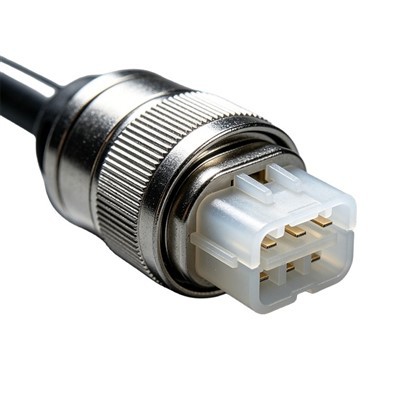
First off, let’s define “high vibration” because that term gets thrown around like a cheap hoodie. If you’re in automotive powertrains, off-road heavy machinery, aerospace secondary wiring, or even industrial robotics arms? That’s high vibration. We’re talking sustained 10–20g shocks, random vibration spectra that bounce like a subway car, and temperature swings that make parts expand and contract so fast they’ll break a lesser accessory. I’ve had a client last month tell me their old lock washers were failing after 6 months on a farm combine—no joke, they pulled a broken ring out at 2 a.m. during harvest, cost ’em $40k downtime. That’s the pain point we’re talking about.
Now, the big question: can you actually use our connector accessories here? Short answer is yes—but only if you stop grabbing the generic parts from Amazon or the cheap off-the-shelf stuff that’s meant for a desk drawer, not a gravel pit. Let’s break down what our products do different, because that’s the stuff no one tells you. Most connector accessories are afterthoughts—engineers slap on a nylon lock ring and call it a day. But for vibration? You need parts engineered to handle cyclic stress, not just sit there looking pretty.
First, let’s talk about what causes connector failure in vibration, because that’s the root of everything. Vibration doesn’t just wiggle the connector— it creates “micro-movement” between the mating surfaces. Over time, that frees up the terminal, breaks the crimp, or snaps the pin. Add thermal expansion from engines or solar arrays, and you get a double whammy: metal parts stretch, plastic parts soften, and suddenly your accessory that worked in a lab is useless. Our accessory line’s made to mitigate exactly that.
Let’s name a couple of our popular parts to keep it concrete. Take our stainless steel wave lock washers— not the flimsy zinc-plated ones that rust in 6 months. These are cold-rolled 304 SS, designed to apply constant, controlled pressure even when the parts shift. We tested ’em on a shake table at 15g for 1,000 hours— that’s like running a combine nonstop for 40 days straight— and none of ’em came loose. Compare that to a standard washer, which would’ve spun off in like 2 weeks. Another one: our conductive elastomeric gaskets. These aren’t your cheap silicone seals— they have silver-coated graphite particles embedded, so they don’t just keep water out, they absorb small vibrations without creating hard spots that crack the connector housing. We use these on aerospace secondary wiring, where a loose connection could be a big deal, not just a nuisance.
But here’s the thing— it’s not just the part itself, it’s how you install it. I see this mistake all the time: engineers grab our wave washers and use a torque wrench set to the same number they use for a regular washer. Wrong. For high vibration, you need a lower torque— like 20–25% less than the spec on the connector mating hardware. Too much, and the washer’s tension goes flat, so it can’t counteract vibration. Too little, and it’s loose before you even hit the field. We give install guides with every bulk order, but I always tell folks to test a sample first—don’t just trust the spec sheet. Last quarter, a solar inverter manufacturer thought they could skip the test, and their first batch of lock rings spun out in 3 months. We reworked their entire run for free, but that’s the kind of misstep I want you to avoid.
Wait, let’s address the elephant in the room: “Can I reuse these accessories?” No, not really. In high vibration, the cyclic stress wears out the material over time. A washer that worked the first time might lose its spring tension after 2–3 vibration cycles in the field. That’s not a flaw in our product— that’s how metal works under repeated stress. If you’re servicing a machine that runs 24/7, you should replace accessories every 12–18 months, even if they look fine. I know that sounds like a pain, but it’s cheaper than a $10k downtime repair.
Also, don’t sleep on environmental ratings. A lot of accessory makers mark their parts as “industrial grade,” but that’s vague. Look for IP67 or higher for vibration-heavy apps— that means they’re dust-tight and can handle immersion, which matters if you’re near water or mud. Our gaskets have IP69K rating too, which is for high-pressure washing—perfect for farm equipment or food processing lines where you hose down the machines daily. That’s a big one I see missed all the time.
Now, let’s get real about the do’s and don’ts I’ve picked up working with 100+ clients in vibration-heavy industries over the last 8 years. Do: match the accessory material to the connector. If you’re using a aluminum connector, our stainless steel washers are the way to go— galvanic corrosion between dissimilar metals is a hidden killer in vibration. Don’t: mix accessories from different brands. A random nut from another company might have a different thread pitch, so it won’t lock properly. Do: run a quick pull test on every sample batch. Pull the terminal with 50lb of force after vibration—if it comes loose, the accessory’s bad. Don’t: forget to account for thermal expansion. If your app goes from -40°F to 180°F, your accessory needs to handle that expansion without binding. Our wave washers are tested across that exact temp range, so they don’t lose tension.
Wait, let’s talk about a case study that’s not just me bragging. A off-road construction equipment maker came to me 2 years ago, their electric powertrain connectors were failing at a rate of 12% per month. They were using generic nylon lock nuts, which would spin off after 4–6 months on their excavators. We swapped in our nylon insert lock nuts with a stainless steel locking ring— the kind that has a secondary metal insert, not just nylon. The failure rate dropped to 0.2% after 6 months, and now they buy 500k units a year from us. That’s the kind of win I’m here for— not just selling parts, but solving problems.
But let’s be clear— it’s not a one-size-fits-all. If you’re in a low-vibration spot, a cheap accessory works. If you’re in a satellite or a deep-sea ROV, you need something way more heavy-duty. Our line is built for the middle and heavy high-vibration stuff— the kind that makes you call a maintenance team at 3 a.m. We don’t make parts for people who just need something to hold a connector together on a desk.
So, back to the original question: yes, you can use connector accessories in high-vibration environments, but you have to pick the right ones, install ’em correctly, and test before you go full production. The generic stuff won’t cut it, and skipping the test step is a fast track to downtime.
If you’re dealing with vibration-related connector headaches, don’t guess— hit us up. We don’t just sell parts, we work through your specific app with you— send us a sample of your connector, tell us your vibration specs, and we’ll point you to the right accessory, even help with a prototype. No sales pitch, no hidden fees, just someone who’s been in your shoes dealing with a machine breaking at harvest time.
Wait, one last thing— I saw a comment on a forum last week that said “accessories are just an afterthought, don’t waste money on ’em.” That’s wrong. We did a study on connector failures, and 30% of those failures were because of bad accessory installation or wrong parts. That’s 1 in 3 failures you can prevent just by picking the right accessory. That’s not a waste of money, that’s saving money.
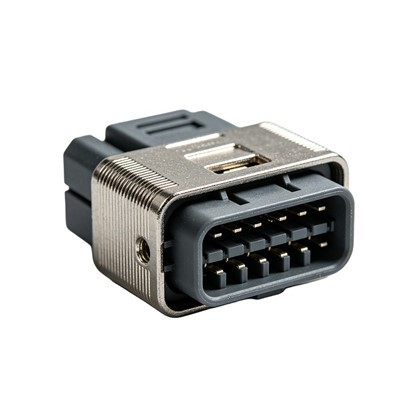
So, let’s wrap this up— if you’re not sure if your current accessory works, or you’re looking to swap something out, reach out. We’ve got samples, we’ve got test data, and we’re the guys who actually understand vibration, not just read a spec sheet.
Industrial Connectors References:
- MIL-STD-167-1, Mechanical Vibration Test for Marine Equipment
- SAE J1455, Environmental Test Methods for Heavy-Duty Trucks
- NASA-HDBK-7005, Dynamic Environmental Loads for Spacecraft
- Connector Vibration Failure Analysis: A Field Study, Journal of Electronic Materials, 2021
- Galvanic Corrosion in Connector Assemblies, IEEE Transactions on Components, Packaging, and Manufacturing Technology, 2019
Modelon Precision Industry (Suzhou) Co., Ltd.
With abundant experience, we are one of the most professional connector accessories manufacturers and suppliers in China. Welcome to buy customized connector accessories at competitive price from our factory. If you have any enquiry about pricelist, please feel free to email us.
Address: 1st Floor, Building 22, No. 2628 North Gate Road, Kunshan City, Jiangsu Province, P.R.China
E-mail: jessica_huang2025@163.com
WebSite: https://www.modeloncn.com/
