If you’ve ever stood under the hood of a working car, watched a conveyor line move parts through a factory, or seen a wind turbine blade spin steadily in a breeze, you’ve probably interacted with an output shaft without even noticing. As someone who’s spent the last 12 years supplying precision-engineered output shafts to industries across North America, I can tell you this humble component is one of the most overlooked workhorses in mechanical engineering. We don’t build flashy parts that steal showstopping headlines—our output shafts quietly turn raw power from an engine, motor, or transmission into the motion that keeps your daily life running. Let’s break down what they actually do, why they matter more than most people realize, and how we make sure they get the job done right. Output Shaft

First, let’s get the basic function straight, because even the most seasoned maintenance tech sometimes mixes up input and output shafts. An input shaft takes power into a mechanical system—think of the shaft connecting a car’s clutch to its transmission, that’s where engine power comes in. An output shaft takes that processed power and delivers it to whatever needs to move. It’s the bridge between the power source and the load, and its core job is two-fold: transfer rotational torque efficiently, and do so reliably under constant, often extreme, stress. Torque, for those who don’t deal with it day-to-day, is the twisting force that makes things move. A 2-ton pickup truck needs way more torque to pull a trailer than a compact commuter car, so its output shaft has to handle that extra force without bending, warping, or breaking mid-trip.
But output shafts aren’t one-size-fits-all, which is why our team at the supply company spends so much time customizing each order to fit the exact application. Let’s walk through a few common examples to make this tangible. Take a standard passenger car: the output shaft sits at the end of the transmission, sending power to the differential, which splits it to the front or rear wheels. If that shaft is too weak, you might get a broken axle mid-drive, a problem that leaves you stranded on the side of a highway. If it’s too heavy, it adds unnecessary weight to the vehicle, hurting fuel efficiency—an issue that car makers are hyper-focused on right now as they try to hit tighter emissions standards.
Then there’s industrial equipment, like the conveyor systems in a food processing plant. Those conveyors have to move hundreds of pounds of raw chicken or packaged snacks every hour, 24/7, with zero downtime. The output shaft here doesn’t just carry torque—it has to be corrosion-resistant, because it’s exposed to water, cleaning chemicals, and food residue. A standard steel shaft would rust after a few months, leading to costly unplanned shutdowns. So we supply stainless steel output shafts here, precision-machined to exact tolerances so they spin smoothly without wobbling, which would cause the conveyor to misalign and spill product.
Wind turbines are another great example. The turbine’s blades spin in the wind, turning a low-speed rotor shaft, which connects to a gearbox. The gearbox increases the rotational speed and sends that power to a generator, but before that, it has an output shaft that’s been engineered to handle variable torque—one minute the wind is blowing hard, so the shaft twists with force; the next, a lull means barely any torque at all. If the shaft can’t handle those fluctuating loads, it will fatigue over time, leading to a catastrophic failure that takes a turbine offline for weeks, costing thousands in lost energy production. Our team works with wind farm operators to test output shafts under real-world load conditions, simulating years of wind stress in a matter of days to make sure their components last 20 years or more.
What most people don’t realize is that output shafts have evolved a lot in the last decade, as industries shift to electric power. Electric vehicles (EVs) don’t have traditional transmissions with multiple gears like gas cars, but they still need output shafts—they just work a little differently. EV motors deliver maximum torque instantly, so their output shafts have to handle that immediate, high torque without the buffer of a multi-gear transmission. We’ve had to adjust our machining processes to make these shafts lighter, with tighter tolerances, because EV manufacturers are pushing for every pound of weight they can cut to extend battery range. It’s a constant learning curve, but that’s the fun part of being in this business—staying ahead of the needs of industries that are changing fast.
Reliability is non-negotiable for any output shaft, and that’s why quality control is at the core of everything we do. We don’t just cut metal and call it a day. Every shaft we supply goes through three layers of testing before it leaves our warehouse. First, a dimensional check with coordinate measuring machines (CMMs) to make sure it’s within 0.001 inches of the specified measurements—any tiny imperfection, like a misaligned spline, can cause premature wear. Second, a torque test, where we apply 150% of the maximum load the shaft will ever see to make sure it doesn’t bend or crack. Third, a surface finish test, because a rough surface can cause friction, leading to overheating and failure over time. We also work with clients to design shafts that are compatible with their existing systems, whether that means custom spline patterns, specific lengths, or coatings for extreme environments.
I’ve seen firsthand what happens when a cheap, poorly made output shaft fails. A few years back, we got a call from a small construction company that had bought a cheap replacement shaft for their skid steer from a discount supplier. The shaft broke mid-operation while they were digging a foundation, leaving their crew idle for three days, costing them thousands in lost revenue and emergency repair fees. That’s when they switched to our shafts, and they’ve been repeat customers ever since. Stories like that stick with me—our work isn’t just about selling parts; it’s about keeping our clients’ operations running, their employees safe, and their budgets on track.
Another thing that sets us apart as a supplier is our commitment to lead times. In manufacturing, downtime costs money, so clients can’t wait weeks for a custom shaft. We keep a large inventory of standard output shafts in stock, and we have a team of machinists on hand to turn around custom orders in as little as three days for urgent jobs. That flexibility has helped us build long-term relationships with clients, from small farm equipment shops to large automotive manufacturers.
So, to circle back to the original question: What is the function of an output shaft? It’s not just a part that turns. It’s the critical link that turns power into action, whether that’s a passenger getting to work on time, a factory getting their products to market, or a wind farm generating clean energy. It’s a component that’s often hidden away, but without it, almost every mechanical system we rely on every day would stop working.
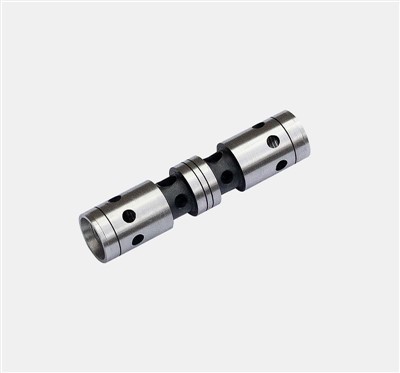
If you’re in the market for reliable, precision-engineered output shafts—whether for automotive, industrial, wind energy, agricultural, or any other application—I’d love to talk through your needs. We offer custom design, competitive pricing, and fast turnaround times to make sure you get the right part for your job, when you need it. Don’t settle for cheap, untested shafts that could leave you stranded or causing costly downtime. Reach out today to start a conversation about your output shaft requirements.
Precision Machined Parts References:
Shigley, J. E., & Mischke, C. R. (2001). Standard Handbook of Machine Design. McGraw-Hill.
Norton, R. L. (2011). Machine Design: An Integrated Approach. Prentice Hall.
American Gear Manufacturers Association. (2018). AGMA Standard for General Purpose Output Shafts. AGMA International.
Taizhou Liuhuan Machinery Co., Ltd.
As one of the most professional output shaft manufacturers and suppliers in China, we’re featured by quality products and good service. Please rest assured to buy customized output shaft made in China here from our factory. For quotation, contact us now.
Address: Xinyuan Industrial Zone, Damaiyu Street, Yuhuan City, Zhejiang Province,China
E-mail: tzlhmachining@gmail.com
WebSite: https://www.tzlhmachining.com/
