If you’ve ever stood next to a stone flaming machine in a fabrication yard, you’ve felt the low, rumbling power of it—those high-temperature flames blast across granite, marble, or bluestone to etch a non-slip, textured finish without chipping or cracking the surface. But as a supplier of these machines for nearly 12 years, I’ve seen first-hand how easy it is for operators to cut corners on safety, and how devastating that can be. Last year, a small stone shop I work with had to shut down for three weeks after an operator failed to train properly, and a flying stone splinter from an improperly secured slab nicked their forearm. This isn’t just about following rules—it’s about keeping people safe. If you’re new to the stone industry or looking to upgrade your machine, knowing which safety standards actually apply is non-negotiable. Stone Flaming Machine
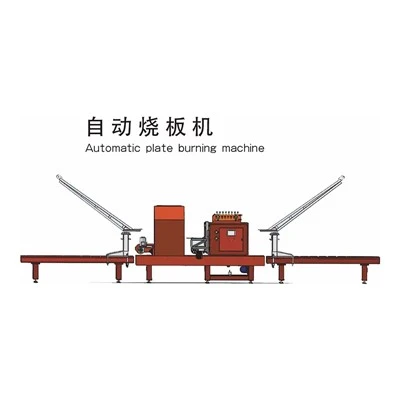
First, let’s clarify what stone flaming machines do. They’re industrial tools that burn natural gas or propane, mixing fuel with oxygen to create flames that hit the stone surface at 1,800 to 2,500 degrees Fahrenheit. The heat blasts away the top layer of the stone, leaving a rough, anti-slip texture ideal for patios, pool decks, or industrial walkways. But those high flames, heavy slabs, and pressurized gas cylinders mean these machines aren’t your average power tool. Safety standards here break down into three core categories: machine design standards, operational standards for workers, and regulatory standards for the workplace. None of these are optional, and I’ve seen too many shops buy cheap, uncertified machines to save a buck, only to pay for it later with fines, accidents, or lost time.
Starting with machine design standards—these are the rules that go into building the machine itself, not how you use it. The main global standard for industrial equipment like this is ISO 12100:2010, the international standard for risk assessment of machinery. For our stone flaming machines, that means manufacturers have to map out every possible hazard: gas leaks, flying debris, hot surfaces, and the risk of the machine tipping over under the weight of a 2,000-pound slab. ISO 12100 requires a risk reduction hierarchy: first, design out hazards entirely, then add protective measures, then provide warnings and training.
For us as a supplier, that means every machine we sell has a gas leak detection system that shuts off fuel automatically if a leak is detected, a heat shield around the nozzle to prevent accidental burns, and a locking mechanism to hold slabs securely in place. But here’s what most buyers miss: ISO 12100 also mandates emergency stop (E-stop) buttons that are easy to reach, even when the machine is running, and clearly labeled. Cheap machines often skimp on this—their E-stops are hidden behind the control panel, or don’t cut fuel and power simultaneously. We learned this the hard way early on: a customer once called us upset because their old machine’s E-stop didn’t shut off the gas line, leading to a small explosion when a spark ignited leaked fuel. That’s why we now test every machine’s E-stop three times before it leaves our warehouse.
In the U.S., there’s an additional critical standard from OSHA, the Occupational Safety and Health Administration, specifically for gas-powered industrial equipment used in stone work. OSHA’s 29 CFR 1910.103 deals with compressed gas, which is exactly what fuel cylinders are. This standard requires that gas cylinders be stored upright, chained to prevent tipping, and kept at least 20 feet away from flammable materials like wood or fabric. For stone flaming machines, that means the machine’s gas supply line must have a pressure regulator that’s certified to prevent overpressurization—another thing cheap machines skip. We include pressure regulators tested to meet OSHA specs on every machine we deliver, because nothing’s worse than a cylinder rupturing.
Beyond machine design, there are operational safety standards—rules for how workers use the machine. The American National Standards Institute (ANSI) has a key standard here: ANSI B11.0, Safety of Machinery. For stone processing equipment like flaming machines, ANSI B11.0 requires specific guardrails and work zone controls. This means operators can’t stand within 3 feet of the flaming nozzle while the machine is running—no exceptions. We’ve had operators try to lean in to check the finish faster, and a few have ended up with minor burns from stray flames. ANSI B11.0 also mandates that all workers using these machines have specialized training, not just general power tool training. That’s a big one: many small stone shops will hire a new worker, give them a 10-minute demo, and turn them loose on the machine. I’ve seen that lead to accidents that could have been avoided with proper training, which aligns with ANSI’s requirements.
Another operational standard is OSHA’s 29 CFR 1910.132, which covers personal protective equipment (PPE). For stone flaming machines, this isn’t just goggles and gloves. OSHA requires face shields with side protection (to block flying stone splinters), heat-resistant gloves rated for 2,500 degrees Fahrenheit, flame-resistant aprons, and non-slip steel-toe boots. Many shops skip the face shields in favor of safety glasses, but glasses don’t protect from large stone chips that can fly 20 feet or more. Last year, a customer of mine had an operator wear only safety glasses; a 1-inch stone chip hit him in the eye, requiring emergency surgery. We now include a full PPE kit with every machine we sell, and we require that our customers train their workers on why each piece is non-negotiable.
Then there are workplace regulatory standards, which vary a bit by location but have global consistency. In the EU, for example, the Machinery Directive 2006/42/EC requires that all industrial machines, including stone flaming machines, carry a CE mark proving they meet all safety standards. If a machine doesn’t have a CE mark, EU shops can’t legally use it. In Canada, the Canadian Standards Association (CSA) has similar requirements, with a CSA certification that means the machine is tested for gas leaks, E-stop functionality, and structural integrity. For our business, we ensure every machine meets both CE and CSA standards for international buyers, and NRTL (Nationally Recognized Testing Laboratory) standards for U.S. buyers, because cutting corners on certification means a shop could face fines or be shut down by regulators.
I’ve also had to educate customers on common mistakes that fall outside formal standards but are just as dangerous. For example, many operators will leave a slab unsecured, assuming it’s heavy enough not to move. But when the high flames hit the stone, it can expand and shift, sending the slab sliding into the machine’s control panel. We’ve designed our machines with a heavy-duty slab clamp to prevent this, but the operational standard here is that operators must never load a slab without securing it first, which we cover in our mandatory training for new customers.
Another hidden hazard is exhaust. Stone flaming produces fumes from the burned gas and the stone itself, especially if you’re working with marble, which releases silica dust when heated. OSHA’s 29 CFR 1910.1000 sets limits on silica dust exposure, so shops must have local exhaust ventilation (LEV) systems that pull fumes away from the operator’s breathing zone. That’s not a standard for the machine, but it’s a required part of the workplace when using the machine, and we always remind customers to install these systems before running their first flaming job.
As a supplier, our role isn’t just to sell machines—it’s to make sure our customers understand and comply with all these standards. Too many vendors will just sell you a machine and say “follow safety rules,” but we go further. Every machine we sell comes with a 40-page safety manual that breaks down each standard, step-by-step, and we offer free on-site training for our customers’ teams within the first 30 days of delivery. We also have a 24/7 support line for any safety questions—last month, a customer called at 9 p.m. because an operator noticed a faint gas smell, and we walked them through checking the leak detector system over the phone, preventing a potential disaster.
I’ve seen the cost of ignoring these standards, both in human terms and business terms. A friend who owns a stone shop in Chicago was fined $15,000 by OSHA last year for not having proper E-stops on their flaming machines, plus $8,000 in medical bills for an operator who was burned. A small shop in Florida went out of business after a gas cylinder ruptured, killing an operator, because they used an uncertified machine that lacked pressure regulation. These aren’t just statistics—they’re real people and real businesses.
If you’re in the market for a stone flaming machine, don’t just look at price or production speed. Ask for proof of certification: ISO 12100, OSHA compliance, CE or CSA marks. Ask about safety features: gas leak detectors, E-stops, slab clamps, heat shields. And make sure you’re prepared to meet the operational standards: training, PPE, ventilation, secure gas storage. These standards are there because someone learned the hard way what happens when they’re ignored.

At the end of the day, stone flaming is a valuable process that creates products people use every day. It doesn’t have to be dangerous if you follow the right standards. If you’re ready to upgrade your machine or just want to make sure your current setup is compliant, reach out to our team to discuss your needs. We’ll walk you through every safety standard, answer all your questions, and make sure you have the tools and knowledge to keep your team safe.
Bush Hammered Machine References:
- International Organization for Standardization. ISO 12100:2010, Safety of machinery — General principles for design — Risk assessment and risk reduction.
- Occupational Safety and Health Administration. 29 CFR 1910.103, Gases, vapor, fumes, and dusts — Compressed gases.
- American National Standards Institute. ANSI B11.0-2020, Safety of Machinery — General Requirements, Definitions and Methodology.
- Occupational Safety and Health Administration. 29 CFR 1910.132, Personal Protective Equipment.
- European Commission. Machinery Directive 2006/42/EC, Official Journal of the European Union.
- Canadian Standards Association. CSA Z240.5-19, Safety Requirements for Industrial Stone Processing Equipment.
Nanan Yeteng Machinery Co., Ltd.
With abundant experience, we are one of the most professional stone flaming machine manufacturers and suppliers in China. Please feel free to wholesale durable stone flaming machine in stock here from our factory. All customized machines are with high quality and competitive price.
Address: Nan’An Ye Teng Machinery Co Ltd(No,Dk24-F, Hailian Hi Tech Business Incubator, Shuitou Town, Nanan City Fujian China)
E-mail: 17758730131@163.com
WebSite: https://www.yetengmachine.com/
