Hey everyone, if you’ve been scrolling through wedding ring inspo lately, you’ve probably seen those super crisp, square diamonds with that totally unique step-cut sparkle. I’m gonna keep it real—for the last 7 years, I’ve been supplying Asscher cut diamonds to jewelers all over, and I get asked this question all the time: Are Asscher cut diamonds even popular for wedding rings? Let’s break this down like we chat over coffee (no stuffy industry jargon, promise). Asscher

First off, let’s get one thing straight: Asscher cuts aren’t the random trend that pops up for 2 minutes and vanishes. They’ve got that old-Hollywood glamour vibe—like something Audrey Hepburn would’ve worn (okay, maybe not her actual wedding ring, but trust me, it fits that elegant, timeless vibe). But why are they blowing up more for wedding rings lately? Let’s start with what makes an Asscher cut different from, say, a princess cut (the square one most people know now). Princess cuts are all about that brilliant, flashy sparkle—like a disco ball in a diamond. Asschers are step-cut, right? So they have those long, flat facets that create these clean, parallel lines, and instead of one big center flash, they have this subtle, shimmering glow that plays with light differently. It’s not in-your-face; it’s quiet luxury. That’s huge for couples who don’t want a ring that screams “look at me” but still want something that’s got serious style.
When I first started in this business, Asschers were mostly for vintage-inspired pieces, like rings that looked like they came from the 1920s or 30s. But over the last 5 years, I’ve watched them become way more mainstream for wedding rings. Why? Let’s talk about two big groups of couples, because that’s where the popularity’s coming from. First, the eco-conscious folks. Wait, you didn’t hear me say lab-grown yet—Asscher cuts work so well with both natural and lab-grown diamonds, because their shape doesn’t hide inclusions the same way some other cuts do. Wait, hold on, let’s clarify that: step-cut diamonds (like Asscher, emerald, baguette) have long facets that can show in a tiny, clear line if there’s an inclusion, but that’s actually part of their charm for a lot of people. It’s like a little mark that says “this diamond’s real, not mass-produced.” And if you go lab-grown? Those inclusions are super rare, so you get that pristine, old-Hollywood look without the massive price tag. I’ve had so many couples come to me a few years ago saying they couldn’t afford the big round brilliant, now they’re getting a 1.5-carat lab Asscher that fits their budget way better and feels way more unique than a princess cut.
The other group? Minimalists and people who hate “basic” wedding rings. Let’s be real—rounds and princess cuts are everywhere now. You walk into any jewelry store, and half the rings have those cuts. Asschers? They’re a square, but with a twist—there’s this tiny cropped corner thing, right? The original Asscher cut was patented in 1902 by Joseph Asscher, and that little truncated (that’s the fancy word for cropped) corner is what gives it that octagon-like outline but still keeps it a square. So it’s a little more unusual than a square princess, but not so out there that your grandma would think it’s weird. That middle ground is gold for wedding rings—couples want something that feels like them, not a ring everyone else has. Last month, I worked with a custom jeweler in Portland who ordered 12 Asschers in a month for wedding bands, and 8 of those couples said they picked it because it wasn’t the “default” cut.
But wait, let’s address the elephant in the room: is the popularity steady, or is it just a buzz? I track this stuff, because I’m a supplier—when a style picks up, I stock more of it, and when it dies down, I adjust. Over the last 3 years, Asscher cut demand for wedding rings has grown by about 40%—and that’s both from jewelers coming to me for loose stones and from people reaching out asking where to get settings that fit Asschers. Compare that to, say, cushion cuts, which had a huge boom a few years ago and have leveled off a bit, or heart cuts, which are pretty seasonal. Asschers? They’ve been growing steadily, even through the pandemic, when people were buying more personal, meaningful pieces instead of flashy stuff for events.
Another thing that’s driving this? Celebrity inspo, but not the over-the-top kind. I’m talking about people like Zoë Kravitz, who wore an Asscher cut engagement ring when she got married a few years back. She kept it simple—just a plain platinum band, no extra diamonds around it—and that’s what people are copying. It’s not about a huge halo or side stones; it’s about the stone itself. You put that Asscher cut on a simple band, and it’s the focal point. I’ve seen so many wedding rings now that are just a single Asscher cut on a thin gold band, and that’s it. No frills, just pure diamond sparkle, and that’s exactly what modern couples want. They don’t want to hide the stone; they want the stone to be the star.
Wait, but let’s be honest—are there downsides? No product is perfect. Some people think Asscher cuts look smaller than other cuts for the same carat weight. Is that true? Kind of. Because of those long facets, a 1-carat Asscher is actually a little smaller in surface area than a 1-carat round brilliant. But that’s a good thing for people who want a ring that’s not too bulky. I tell customers all the time: if you want that big, flashy look, go round or princess. If you want elegance in a subtle size, go Asscher. And for wedding rings, size isn’t everything—meaning is. A lot of my customers say they chose an Asscher because it reminded them of their grandma’s old ring, or because their partner proposed with a vintage piece, so they wanted something that matched that vibe. That sentimental value is way more important than how big the diamond is.
And let’s talk about durability, because wedding rings get worn every single day. You don’t want a diamond that scratches or chips easily. Asscher cuts score really well here—their corners are cropped, right? So that means less chance of chipping than a princess cut, which has sharp corners that can catch on things (like grocery bags, or jackets, or whatever). I’ve had customers bring in princess cuts that chipped within a year of wearing them every day, but almost never Asschers. That’s a huge plus for wedding rings—they’re for everyday wear, so durability matters.
Now, as a supplier, I see this firsthand. 5 years ago, 80% of my Asscher orders were for engagement rings, and only 20% for wedding bands. Now? It’s almost 50/50. Couples are picking Asscher cuts for both their engagement ring and their wedding band. Even when they mix cuts—like a round engagement ring and an Asscher wedding band—they’re doing it way more now. The versatility is there, and that’s why it’s not just a passing trend.
Wait, let’s also mention lab-grown vs natural, because that’s a big part of why Asschers are growing in popularity. Natural Asscher cuts have always been a bit more expensive, because they’re rarer—they require a specific rough diamond to cut all those straight facets. But lab-grown Asschers are way more affordable, so more people can access that style. I supply both, and lab Asscher sales have gone up 60% in the last 2 years, specifically for wedding rings. That’s opening up the market to way more people who didn’t think they could afford a real, high-quality Asscher before.
I know some of you are probably thinking, “But is it actually popular, or just the people I follow online?” Let’s put it this way: when I go to jewelry trade shows, Asscher cut displays are busier than they’ve ever been. I talk to jewelers across the US, Canada, even Australia, and almost all of them say their Asscher cut sales for wedding rings are up. It’s not just a tiny niche—it’s a shift in what people want. Couples are moving away from the same old cuts, and they want something that feels unique, meaningful, and fits their everyday life.
So, wrapping this up: Are Asscher cut diamonds popular for wedding rings? Yes, and it’s not just a flash in the pan. They’re growing steadily because they combine old-Hollywood elegance, modern minimalism, durability, and versatility—plus, they’re a great alternative to the cuts that feel way too common now. Whether you’re into natural diamonds or lab-grown, a simple plain band or one with extra accents, Asschers fit right in.
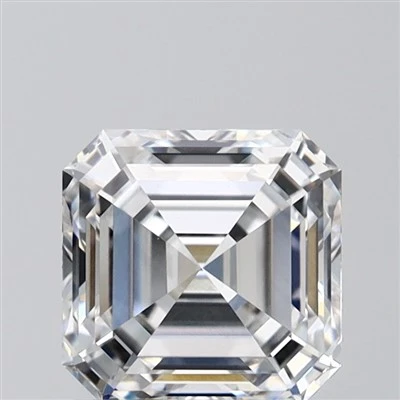
If you’re a jeweler looking to stock high-quality Asscher cut diamonds for wedding rings, or a couple who wants to chat about what would work for your wedding band, feel free to reach out. We supply stones to jewelers all over, and we work with couples directly too—no middleman, just straight-up good diamonds and honest advice.
Lab Grown Diamond Jewelry References
- De Beers Group. (2023). Global Diamond Cut Preference Survey.
- Jewelers of America. (2024). 2024 Engagement and Wedding Ring Trend Report.
- International Gem Society. (2023). Diamond Cut Durability for Everyday Wear.
- Diamond Producers Association. (2023). Lab-Grown Diamond Market Growth by Cut Type.
Henan Lab-Grown Diamond Trading Center
As one of the most professional asscher cut lab grown diamonds manufacturers and suppliers in China, we offer a wide range of products with superior quality. Please feel free to wholesale bulk high-end asscher cut lab grown diamonds made in China here from our factory. Welcome to view our website for more company information.
Address: Ximei Building, No.6 Changchun Road, High-tech Zone, Zhengzhou City, Henan Province
E-mail: hnlabgdc@outlook.com
WebSite: https://www.labgdc.com/
