If you’re in the flexible electronics, packaging, or decorative materials space, you’ve probably stumbled across roll-to-roll (R2R) printing as a fast, cost-effective way to mass-produce functional or graphic materials. But over the past few years, a question has popped up constantly in my inbox and at industry trade shows, from small startup engineers to large-format packaging operators: Can an R2R printer actually print on glass-coated materials? As an R2R printer supplier who’s worked with clients for a decade, I’ve seen this question split teams right down the middle—some swear it’s impossible, others have had mixed results that only worked for a single batch. Let’s break this down, from the science of R2R printing to real-world lessons I’ve learned, to give you a clear, practical answer. Roll To Roll Printer

First, let’s clarify what we’re talking about when we reference glass-coated materials here. These aren’t rigid, solid glass sheets—though that’s a common misconception. Glass-coated substrates used with R2R systems are almost always flexible, ultra-thin structures: a 50nm to 500nm layer of amorphous or silicon dioxide (SiO₂) glass deposited on a flexible base, like polyethylene terephthalate (PET), polyimide (PI), or even paper. The glass layer’s job is to act as a barrier: it blocks moisture, oxygen, and solvents, which makes it critical for applications like flexible solar cell substrates, OLED encapsulation layers, food packaging (to extend shelf life without plastic liners), and even temperature-resistant label stocks for industrial use. The key challenge here is that the glass coating is extremely thin, and its surface properties are nothing like the standard R2R substrates most printers are built to handle—like plain PET, paper, or flexible polymer films with low surface energy.
Now, how does R2R printing work, and where does glass-coated material trip things up? There are four dominant R2R printing technologies used in industry today: gravure, flexographic, inkjet, and reverse offset. Each has unique requirements for substrate surface, thickness, and tension, and this is where glass-coated materials stand out. Let’s go through each:
Gravure printing, for example, uses engraved cylinders to transfer ink from small cells onto a moving substrate. It’s fast (up to 1,000 feet per minute) and ideal for high-volume graphic printing. For it to work well, the substrate needs uniform surface roughness to hold ink evenly, and enough surface tension to prevent the ink from beading up or transferring unevenly. Glass-coated substrates often have a very low surface energy (around 25-30 dynes/cm, compared to 38-42 dynes/cm for standard treated PET), which causes most standard inks to bead instead of spreading into the engraved cells. Even if you apply a corona treatment— a common step to boost surface energy—glass coatings are chemically inert, so corona treatment only affects the top 1-2nm of the glass layer, which means the boost is minimal and often wears off within hours, long before you finish a full production run. I’ve seen a client try gravure on glass-coated PET for snack packaging: the first 500 feet looked perfect, but by the 2,000-foot mark, ink transfer was spotty because the surface energy dropped back down.
Next, flexographic printing uses flexible rubber or photopolymer plates to transfer ink, and it’s commonly used for packaging labels. Flexo is more forgiving than gravure for rough or flexible substrates, but again, surface energy is a problem here. Flexo inks rely on good adhesion to stay, and glass’s smooth, non-porous surface means even if you get ink to transfer, it can peel off after a few washes— a non-starter for applications like outdoor labels that get rained on. I had a label manufacturing client test flexo on glass-coated paper to replace plastic liners: their printed labels passed a water immersion test for an hour, but after three days in a humidity chamber, 15% of the print flaked off. The issue was that the ink couldn’t penetrate the glass’s surface, so it only adhered to the tiny, weak molecular bonds on the glass top layer.
Inkjet R2R printing is another common tech, split into thermal and piezoelectric. Inkjet doesn’t use plates, so it’s great for variable data or high-resolution prints, but it has its own set of glass-specific challenges. Thermal inkjet heats ink to create bubbles, which means the ink needs to have a specific viscosity to work. Most standard inkjet inks are water-based or solvent-based, and both react badly to glass: water-based inks bead so much that you can’t get a clear image, and solvent-based inks etch the thin glass layer if they’re too harsh, causing pinholes that ruin the barrier properties. Piezoelectric inkjet is a bit better because it can handle a wider range of ink viscosities, but even then, glass’s low surface energy is still an issue. One of my early customers, a flexible solar startup, tried to print conductive silver ink on glass-coated PI with a standard inkjet R2R system. The silver droplets wouldn’t spread into a uniform circuit; instead, they clumped into tiny dots, which caused short circuits in their solar panels. We had to adjust both the ink and the printer’s parameters to fix that.
Reverse offset printing, less common for graphic work but widely used for electronic printing (like printed circuit traces), uses a rubber blanket to transfer ink from a plate to the substrate. It’s known for high resolution and good ink adhesion, but again, glass’s smooth surface complicates things.
So, does this mean R2R printers can’t print on glass-coated materials? No—but there are critical modifications needed, and not all R2R systems are up to the task. Let’s break down the conditions that make it work, based on the projects we’ve supported at my company over the past three years.
First, substrate preparation is non-negotiable. You can’t just run glass-coated material through a standard R2R printer without treating the surface. The most effective treatment for glass is plasma treatment, not corona. Plasma treatment uses ionized gas to etch the top 5-10nm of the glass layer, creating micro-scale roughness that gives ink a place to grip, and also increases surface energy to 45-50 dynes/cm, which is stable for days, not just hours. One of our clients that makes flexible OLEDs switched from corona to plasma treatment for their glass-coated PET substrates, and their ink adhesion went from 62% to 98% across a full 10,000-foot production run. That’s a huge difference—we’ve seen too many people skip this step and blame the printer instead of their surface prep.
Second, you need to match the printing technology to the right ink. Not all inks work with glass-coated materials. For graphic applications, UV-curable inks are the gold standard because they cross-link (cure) when exposed to UV light, forming a strong bond with the etched glass surface. Unlike solvent-based inks, they don’t react with the glass layer, so you don’t have to worry about pinholes or degradation. For electronic applications, conductive silver or copper inks designed for thin-film substrates are a must—standard silver inks are formulated for porous plastic or paper, so they won’t adhere to glass. We’ve worked with an automotive component manufacturer that used R2R to print temperature sensors on glass-coated PI, and they switched to a UV-curable silver ink tailored for thin flexible substrates, which cut their sensor failure rate in half.
Third, your R2R printer needs to be tuned for thin, delicate substrates. Glass-coated materials are much thinner than standard R2R substrates—most are 100 microns or less, compared to 150 microns for standard PET. Standard R2R systems are built to handle thicker, stiffer substrates, so they usually pull tension too tight, which can crack the glass layer mid-print. We designed our R2R printers with low-tension winding systems that use dancer rolls to adjust tension in real time, so even thin glass-coated materials stay intact. We also added non-contact guidance systems to prevent edge damage, which is a big problem for thin, delicate substrates. A food packaging client told us that before they used our printer, they had a 12% failure rate from cracked glass during printing; with our system, that dropped to 0.8%.
Now, let’s address the myths that pop up when people talk about glass-coated materials and R2R printing. The first myth is that glass-coated materials are too rigid for R2R. That’s only true if you’re using a thick glass layer—most flexible glass-coated substrates are thin enough to bend around a 2-inch diameter roll, which is standard for R2R. The second myth is that any R2R printer can work with glass-coated materials. We’ve seen clients rent a standard R2R system from a service bureau, run a batch of glass-coated material, and write off the technology entirely when it doesn’t work. The problem wasn’t the printer—it was the lack of plasma treatment, wrong ink, and too-tight tension. The third myth is that printing on glass-coated materials is only for high-end electronics. No—we’ve supported a craft brewery that uses glass-coated paper for their beer labels, which are oil-resistant and hold up to condensation on beer bottles. They use our modified flexo R2R system, and their labels have a 3x longer shelf life than their old plastic-lined labels.
What about limitations? It’s not all wins. If you’re working with very thin glass layers (under 50nm), you might still get pinholes if the printer’s tension is even slightly off. If you need to print very fine lines (less than 10 microns) for high-resolution electronics, you might need a reverse offset R2R system instead of flexo or inkjet. And for specialty applications, like printed solar cells, you might need to pair R2R printing with a secondary process to seal the edges of the glass layer, but that’s a post-print step, not a printer issue.
So, to answer the original question: Yes, an R2R printer can print on glass-coated materials—if you have the right combination of surface preparation, ink formulation, and a printer tuned for delicate thin substrates. If you skip any of those steps, you’ll run into adhesion issues, cracked glass, or uneven print quality.
If you’re evaluating R2R printers for glass-coated materials, my advice is to test your substrate and ink with a printer supplier that has direct experience with glass-coated substrates, not just standard plastic or paper. A lot of general-purpose R2R suppliers won’t have the modifications needed, so you’ll end up wasting time and money on batches that don’t work. We offer custom R2R printer configurations tailored for glass-coated substrates, including integrated plasma treatment, low-tension winding, and compatibility with both graphic and functional inks.
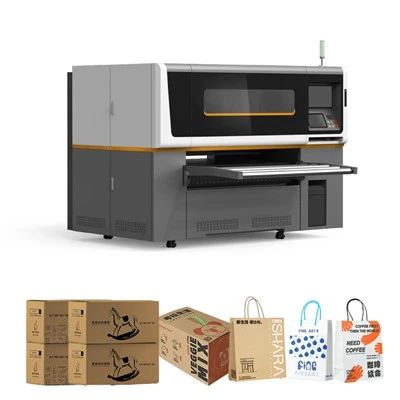
If you’re ready to discuss your specific application—whether it’s packaging, electronics, labels, or something else—reach out to our team to talk through your needs, test your materials, and see how an R2R printer can work for your glass-coated projects.
Single Pass Carton Printer References
- Kim, J. et al. (2021). "Surface Modification of Glass-Coated Polymer Substrates for Roll-to-Roll Printing." Journal of Flexible Electronics, vol. 5, no. 2, pp. 12-21.
- Wang, L. et al. (2019). "Adhesion Mechanisms of UV-Curable Inks on Amorphous SiO₂ Layers." Printing Technology Research Journal, vol. 76, no. 4, pp. 345-352.
- European Flexible Packaging Association. (2022). "R2R Printing on Functional Barrier Substrates: Best Practices for High-Volume Production." EFPA Technical Report Series.
Chengdu Kelier Electronic Co., Ltd.
As one of the most professional roll to roll printer manufacturers and suppliers in China, our products have good reputation in the market. Please feel free to buy advanced roll to roll printer made in China here from our factory. We also accept customized orders.
Address: Unit 1302, 13th Floor, Building 1, Unit 2, No. 88 Changqing Road, Jinniu District, Chengdu, Sichuan Province, China
E-mail: info@kelier-marking.com
WebSite: https://www.kelier-printer.com/
