Hey everyone, Drive Shaft

If you’ve ever spent time around a warehouse, a construction site, or even a big retail distribution center, you’ve probably seen a forklift zooming around, heaping pallets of goods like they’re no big deal. Those things are total workhorses, right? But have you ever stopped to wonder what makes that massive metal lift actually move those heavy loads? Spoiler: one of the most underrated parts is the drive shaft. As a drive shaft supplier, I deal with these parts every single day, and let me tell you—most people don’t have a clue how essential they are to keeping a forklift running smoothly. Today, I’m breaking this down in plain, no-jargon way, no stuffy engineering textbook stuff. Let’s dive in.
First off, let’s set the scene for how a forklift is built, because you can’t talk about the drive shaft without context. Unlike a regular car, which has the engine up front and usually drives the front wheels, most forklifts are rear-wheel drive. Wait, why? Because the heavy load goes on the front forks, so putting the drive wheels in the back balances out the weight—keeps the forklift from tipping forward when you’re hauling a 5,000-pound pallet of soda or whatever. The engine (or on newer electric forklifts, the motor) is typically either under the seat or up front, but the transmission is connected to that power source. Now, the transmission is where the power gets chopped up and sent to the wheels, right? But the transmission and the rear wheels aren’t lined up perfectly. That’s where the drive shaft comes in. Think of it like a super sturdy, rotating metal stick that transfers torque (that’s the twisting force that makes things move) from the transmission to the differential, which then sends that power to the rear wheels to make the forklift go forward or backward. Simple enough, but there’s way more going on here than just a stick spinning.
Let’s get into the nitty-gritty, the stuff that makes forklift drive shafts different from the ones in your pickup truck. First, forklifts operate in a totally different environment than a car on the highway. They’re moving over concrete that’s not always perfect—cracks, expansion joints, even random pallets or debris that make the rear axle bounce up and down all the time. A regular car’s axle moves a little, but a forklift’s rear axle moves a lot, especially when it’s turning or hitting a small bump. If the drive shaft was a fixed, rigid stick like you might imagine, the ends wouldn’t line up when the axle moves, and that would cause all sorts of problems—vibration, weird noises, even breaking the shaft entirely. So forklift drive shafts have to be built to handle that constant shifting, and they use two key parts to make that happen: universal joints (or U-joints, for short) and slip yokes.
Let’s start with U-joints. These are the little cross-shaped things at each end of the drive shaft that let it bend and adjust as the axle moves. Imagine holding two sticks at an angle and connecting them with a hinge— that’s basically a U-joint. They allow the drive shaft to rotate even when the transmission output and the differential input aren’t perfectly aligned. Forklifts are working 8, 10, 12 hours a day sometimes, so these U-joints have to be tough—they’re made of hardened steel, greaseable fittings so you can lube them up every few months to keep them from wearing out, and sealed to keep out all the dust, dirt, and oil that’s everywhere in a warehouse. If a U-joint goes bad, you’ll hear a loud clunk when you shift gears or turn, and eventually, the drive shaft will start vibrating so bad it’ll shake the whole forklift. That’s a big deal—you can’t exactly stop moving a pallet in the middle of a busy warehouse because your drive shaft is making noise.
Then there’s the slip yoke. This is the part that sits inside the transmission, where one end of the drive shaft slides in and out. Because the rear axle moves up and down as the forklift drives over bumps, the distance between the transmission and the differential changes all the time. The slip yoke lets the drive shaft extend or retract a tiny bit to accommodate that change in length, so it never gets pulled too tight or left too loose. Without that, the drive shaft would snap right off when the axle bounces. Again, forklifts are heavy, so the slip yoke has to be precision-machined to fit perfectly—no play, no grinding, just smooth sliding. A lot of cheap drive shaft suppliers cut corners here, making slip yokes that wear out fast, but that’s not something you want in a forklift that’s moving hundreds of pallets a day.
Now, let’s talk about how all this works together when a forklift is actually in operation. Let’s say a forklift driver is grabbing a pallet of boxes, pulling it back to the main aisle, and driving forward to put it on a shelf. The engine (or electric motor) generates power, which goes into the transmission. The transmission adjusts the speed and torque to get the forklift moving at the right pace—slow and steady for warehouse work, not like a race car. Then that power is sent to the drive shaft. The drive shaft spins, and the U-joints let it move with the rear axle, which might be bouncing a little over an expansion joint in the concrete. The slip yoke adjusts the length as the axle shifts, so the drive shaft doesn’t bind up. Then that power goes into the differential, which splits the power between the two rear wheels (and lets them spin at different speeds when turning, which is super important so the forklift doesn’t skid in the warehouse). The wheels spin, and you’re off, moving that heavy load like it’s nothing.
Wait, but what about electric forklifts? A lot of newer warehouses are switching to electric because they’re quieter and don’t have exhaust fumes inside. Does the drive shaft work the same way? Mostly, yeah. Instead of an engine, there’s an electric motor, usually mounted either close to the transmission or even on the rear axle in some compact models, but the drive shaft still does the same job: transferring torque from the power source to the wheels. The only real difference is that electric forklifts often have lower torque at the motor, but forklift drive shafts have to handle that constant stop-and-go—electric forklifts brake and accelerate way more often than gas ones, so the drive shaft has to be durable enough for that repeated stress. I’ve seen electric forklift drive shafts that last 10,000 hours, but only if they’re built right from a good supplier, not the cheap import ones that break after a few hundred hours.
Here’s the thing most people don’t realize: forklift drive shafts aren’t one-size-fits-all. A small pallet jack forklift that lifts 2,000 pounds has a totally different drive shaft than a 10,000-pound capacity forklift that moves construction materials. The size of the drive shaft, the thickness of the steel, the type of U-joints, even the way it’s balanced is all customized for the specific forklift model and its intended use. If you put a drive shaft made for a small forklift on a heavy-duty one, it’ll bend or break under the weight. As a drive shaft supplier, we work directly with forklift manufacturers and maintenance teams to get the specs right every time. We measure the length, the diameter, the U-joint size, the slip yoke fit, and even account for the typical operating environment—like if it’s a forklift that works in a cold storage warehouse (temperatures below freezing, so parts have to handle that) or a construction site with lots of debris.
Common mistakes I see people making with forklift drive shafts: not doing regular maintenance, using the wrong replacement parts, or ignoring small signs of wear. Like, if you hear a little clunk when you shift from forward to reverse, don’t just wait for it to get better—that’s a U-joint wearing out. Eventually, that clunk will turn into a huge bang, and the drive shaft could even detach while the forklift is moving, which is a major safety hazard. Or, using a cheap aftermarket drive shaft from a no-name supplier—those parts are made with thinner steel, lower-quality U-joints, and they’re not balanced properly, so they cause vibration that wears out other parts of the forklift, like the transmission or differential. I’ve had customers come to us after buying a cheap drive shaft online, and within a month, it’s vibrating so bad they have to replace the whole transmission. That’s way more expensive than just buying a quality drive shaft upfront.
Another thing: balance. Drive shafts spin at super high speeds when a forklift is moving—even at 10 mph, that’s hundreds of rotations per minute. If the drive shaft isn’t balanced perfectly, it’ll cause vibration that not only is annoying for the driver but also wears out bearings, U-joints, and the differential way faster. Good drive shaft suppliers (like us, obviously) do dynamic balancing on every single shaft we make. That means we spin it at full speed and add small weights where needed to make sure it’s perfectly balanced. Cheap suppliers skip this step, so their drive shafts cause all kinds of secondary problems. I’ve seen a forklift that had a replacement drive shaft from a no-name company that wore out the differential in 6 months—something that should last years.
Now, let’s talk about why this matters for you, whether you’re a warehouse manager, a forklift operator, or someone who maintains these machines. A forklift that’s down because of a broken drive shaft isn’t moving pallets, and that costs money. Time is money in the warehouse, right? If your drive shaft fails during a busy shift, you’re not just paying for a new part—you’re paying for downtime, maybe even missing delivery deadlines, which can cost you with customers. That’s why investing in a quality, properly engineered drive shaft isn’t an expense—it’s a way to keep your operations running smoothly and save money in the long run.
I know a lot of suppliers out there just crank out generic drive shafts and call it a day, but forklifts are specialized equipment, and their parts need to be too. We don’t do generic stuff here. Every drive shaft we make is tested to handle the specific load, the operating conditions, and the movement of the forklift it’s going into. We use high-grade alloy steel that’s tough enough to handle daily stress, we grease every U-joint so maintenance is easy, we do full dynamic balancing, and we make sure the slip yoke fits perfectly to handle all that axle movement.
So, if you’re reading this and you’re in charge of maintaining a fleet of forklifts, or you’re a forklift manufacturer looking for a reliable drive shaft supplier, hit me up. Whether you need a replacement part for an older model or custom shafts for new equipment, we’ve got you covered. We don’t mess around with cheap parts, and we know exactly how forklift drive shafts work inside and out—because we make them, we repair them, and we work with forklift teams every day to keep their machines moving.
At the end of the day, the drive shaft is a small part, but it’s the backbone of a forklift’s movement. Without it, all that power from the engine or motor can’t get to the wheels, and the forklift is just a big, expensive paperweight. Understanding how it works helps you take better care of it, and investing in a quality one will save you a ton of headaches down the line. Don’t cut corners on this part—your warehouse operations will thank you.
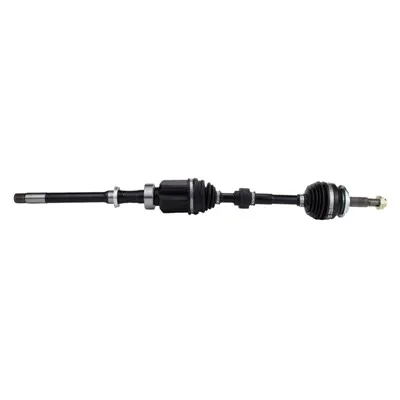
If you have questions about drive shafts for forklifts, or need a quote for replacement or custom parts, reach out anytime. We’re here to help you keep your forklifts running strong.
Wheel Hub References
- Jost, K. (2019). Automotive Drive Shafts: Design, Manufacturing, and Applications. SAE International.
- Forklift Maintenance Handbook. (2021). Material Handling Industry Association.
- Dynamic Balancing of Rotating Shafts for Industrial Equipment. (2020). Journal of Industrial Maintenance and Operations.
- Universal Joints and Slip Yokes for Heavy-Duty Vehicle Applications. (2018). International Journal of Vehicle Design.
Guangzhou Pinxiu Auto Parts Co., Ltd.
As one of the most professional drive shaft manufacturers and suppliers in China, we warmly welcome you to buy durable drive shaft for sale here from our factory. All customized products are with high quality and competitive price. Contact us for pricelist.
Address:
E-mail: pinxiu@cclparts.com
WebSite: https://www.cclauto-parts.com/
