Hey there, if you’ve ever stood next to a blower that’s supposed to keep a whole warehouse ventilated, a wastewater treatment tank aerated, or a HVAC system pushing air evenly through a building, you’ve probably wondered—does this thing actually push air consistently, or is half of it just… random turbulence? That’s where airflow uniformity comes in, and if you’re a blower user, it’s way more important than you think. As a blower supplier, I talk about this all the time, but most folks don’t stop to ask what it even means beyond “does the air feel even.” Let’s break this down like we would over a coffee, no boring jargon dumps, I promise. Blower
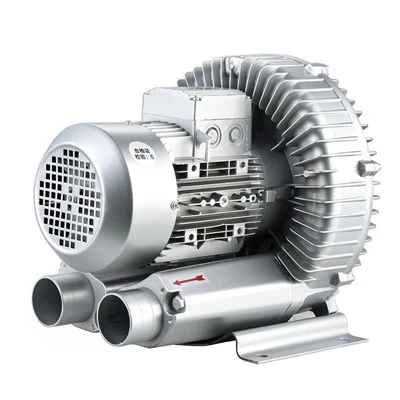
First off, let’s get the basic definition straight—no science textbook-level stuff, just what you need to know. Airflow uniformity basically measures how evenly air is moving across a blower’s outlet, or across the space it’s supposed to push air into. Think of it like pouring a glass of milk: if it’s all smooth and fills the whole glass without big bubbles or gaps, that’s uniform. If half the milk is rushing to one side and leaving a puddle on the other while air pockets pop everywhere? That’s terrible uniformity. For blowers, this matters because if your airflow is all over the place, you’re wasting energy, dealing with inconsistent performance, and even shortening the life of your equipment.
Wait, let’s make that concrete. Say you’re running a dust collection system for a metal fabrication shop. If your blower’s airflow is uneven, some parts of the filter bank will get way more air than others—so one side clogs up in a week, while the other is barely used. That means you’re changing filters way more often than you need to, paying extra for compressed air to clean them, and even risking dust buildup where you don’t want it. Or take a greenhouse: if your circulation blower pushes air so lopsidedly that some plants get constant breeze and others get stagnant hot air, you’ll get uneven growth, mold spots, and way more pest issues. That’s not just annoying—it costs you money.
Now, how do we actually measure this? I get it, numbers aren’t everyone’s thing, but you don’t need a PhD to understand what’s being tested. Most blower manufacturers use an anemometer grid—like a grid of small sensors placed right at the outlet of the blower, maybe 6 inches out, to measure air velocity at every spot. The uniformity is a percentage; 100% would mean every single sensor reads the exact same velocity, which is almost impossible to get in real life. A good blower for most industrial uses is usually in the 80-95% uniformity range. Below 75%? That’s when you start seeing those performance issues we talked about.
Wait, but hold on—uniformity isn’t one-size-fits-all. A blower for a HVAC system has different uniformity needs than one for a pneumatic conveying system, right? For HVAC, you want air even across the whole duct so every room gets the same temperature. For pneumatic conveying, you need enough consistent air to move parts without blowing them all into one corner, but you don’t need perfect symmetry like you would in a data center cooling system. That’s why as a blower supplier, we never sell the same model to every customer—we tailor the blower design to their specific airflow needs because uniformity isn’t a generic metric.
So what causes bad airflow uniformity in a blower? Let’s be real, most of it comes down to design and installation, not just a “broken” blower. First, the blower’s impeller— that’s the spinning part that pushes air. If the impeller is balanced wrong (like, not perfectly symmetric), it’ll create uneven air flow even at low speeds. Or if the inlet or outlet ducts are sized wrong, or have tight turns too close to the blower, that messes up the air before it even leaves the blower. Like, if you run a duct straight off the blower outlet with a 90-degree turn right next to it, the air will get pushed to one side before it even gets out, killing uniformity. Poor installation is actually one of the biggest culprits I see—folks buy a top-tier blower, then rig the duct work wrong and wonder why performance is garbage.
Another thing: wear and tear over time. A blower running 24/7 will have parts that wear down—impeller blades can get nicked, seals can leak, and that will throw off uniformity even if it was great when it was new. That’s why regular maintenance isn’t just about oiling parts—it’s checking that airflow is still even, because that’s a early sign something’s wrong before the blower fully breaks.
Now, let’s talk about common myths. I hear this all the time: “A bigger blower will fix my uneven airflow.” No, not really. If your problem is bad uniformity, shoving a bigger blower just amplifies the unevenness—you’ll get a more powerful gust on one side, worse turbulence, and even higher energy bills. Or another myth: “Uniformity only matters for big industrial blowers.” Nah, even small blowers—like the ones used in home HVAC upgrades, or small workshop dust collectors—benefit from good uniformity. You just might not notice it as much, but over time it saves you money on filters and energy.
So why does this matter to you, the person buying a blower? Let’s circle back to cost. A blower with better uniformity might cost a little more upfront, but it will save you way more long-term. You’ll use less energy (because uneven airflow means the blower is working harder to push air through gaps and turbulence), you’ll have less maintenance on filters and duct work, and your end process will be more consistent. For example, a food processing plant we worked with last year was using a budget blower for their ingredient drying system. Their uniformity was only 70%, so they were drying half the batch too much and the other half not enough, leading to 5% of the product being rejected. They switched to one of our blowers with 90% uniformity, cut product waste by 4%, and saved over $12k a year on energy. That’s the kind of win we care about as a blower supplier, not just selling units.
Wait, but how do you check if a blower has good uniformity before you buy it? Don’t just take the sales pitch—ask for actual test data. Any reputable blower manufacturer can give you performance curves that include airflow uniformity numbers, not just static pressure and airflow rate. If they can’t give you that, run. Also, ask about the design features they use to boost uniformity—things like flow straighteners (little vanes that straighten out air before it exits the blower), custom impeller balancing, and properly sized inlet/outlet transitions. Those small design tweaks make a huge difference.
And if you already have a blower that’s got bad uniformity? It might not mean you have to replace the whole thing. Sometimes adding a flow straightener to the outlet duct, or adjusting the duct work to get straight runs after the blower, will fix it. I’ve seen customers save thousands just by tweaking their existing setup instead of buying new equipment. That’s why we always offer free performance checks for existing blowers—we’ll come out (virtually or in person, wherever works for you) to test uniformity, figure out what’s off, and give you a solution, whether that’s a part add-on or a recommendation for a new blower.
Let’s get real, this isn’t rocket science. Airflow uniformity is just about how consistently your blower does what it’s supposed to do, no guesswork, no wasted time or money. As a blower supplier, we see customers every month guessing about their blower’s performance, and most of the time the fix is just understanding what uniformity actually is, and making sure their blower is matched to their needs.
If you’re in the market for a new blower, or you’re dealing with uneven airflow in your current setup, don’t just go for the cheapest option. Ask about uniformity, ask for test data, and make sure the blower is designed for your specific application. We’ve got a range of blowers for every use case—from small workshop dust collectors to large-scale HVAC and industrial ventilation—all built with uniformity in mind, so you don’t have to deal with the headaches of lopsided airflow.
So if you’re tired of dealing with inconsistent performance, high energy bills, or constant maintenance because of uneven blower airflow, hit us up to chat. We don’t do pushy sales talk—we’ll walk you through what your needs are, help you figure out if uniformity is the issue, and get you set up with a blower that works for you. No jargon, no hidden fees, just straight answers.
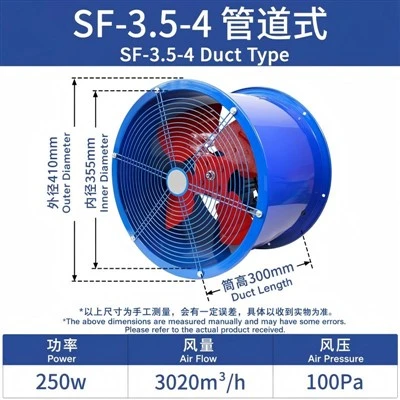
Wait, before I go, let’s make sure we didn’t skip anything: airflow uniformity isn’t just a random buzzword, it’s a core performance metric that directly impacts your bottom line. Good uniformity means consistent airflow, less waste, lower costs, and longer equipment life. Bad uniformity means you’re throwing money away every month. So next time you’re evaluating a blower, don’t just look at CFM (cubic feet per minute) or pressure—ask about uniformity. It’ll make all the difference.
Silencer References
- ASHRAE. (2021). HVAC Applications Handbook: Fans and Air Distribution. American Society of Heating, Refrigerating and Air-Conditioning Engineers.
- European Committee for Standardization. (2019). BS EN 13349: Fans – Performance Testing of Ventilation Fans – Method for Determining Airflow Uniformity. BSI Standards Limited.
- Miller, T. J. (2020). Fan Aerodynamics: Principles and Application for Industrial and Commercial Systems. CRC Press.
- Hydraulic Institute. (2018). Pump and Fan Uniformity Metrics for Process Systems. Hydraulic Institute Press.
Taizhou Yijia Electromechanical Co., Ltd.
Address: No. 47, Jinxing First District, Jintang Village, Jinqing Town, Luqiao District, Taizhou City, Zhejiang Province
E-mail: 826339968@qq.com
WebSite: https://www.yijiablower.com/
