As a supplier of SDEC Pistons, I’ve had the privilege of being deeply involved in the world of piston production and quality control. In this blog, I’ll share my insights into what quality control means in the context of SDEC Piston production. SDEC Piston

Understanding the Basics of SDEC Pistons
SDEC (Shanghai Diesel Engine Co., Ltd.) pistons are crucial components in internal combustion engines. They play a vital role in converting the energy from the combustion of fuel into mechanical motion. The performance of an engine largely depends on the quality of its pistons. SDEC pistons are designed to meet high – performance standards, with precise dimensions, excellent material properties, and reliable durability.
Raw Material Selection
The first step in quality control for SDEC piston production is the selection of raw materials. We source high – grade aluminum alloys, which are known for their light weight, high strength, and good heat – dissipation properties. These alloys are carefully chosen based on strict chemical composition requirements. For example, the silicon content in the alloy can significantly affect the piston’s thermal expansion characteristics. A proper silicon content helps to reduce the piston’s expansion at high temperatures, ensuring a proper fit within the engine cylinder.
We work closely with our material suppliers to ensure that the raw materials meet SDEC’s specifications. Regular inspections are carried out on incoming materials. We use advanced analytical techniques such as spectroscopy to determine the exact chemical composition of the alloys. Any batch of materials that does not meet the required standards is rejected immediately.
Precision Machining
Once the raw materials are approved, the piston manufacturing process begins with precision machining. The machining process is divided into several steps, each of which requires high – precision tools and strict quality control.
The initial step is turning, where the rough piston blank is shaped on a lathe. The dimensions of the piston, such as its diameter, length, and taper, must be machined to extremely tight tolerances. For SDEC pistons, the tolerance for diameter can be as small as a few micrometers. This requires state – of – the – art CNC (Computer Numerical Control) lathes, which are programmed to perform the machining operations with high accuracy.
After turning, the pistons undergo milling operations to create features such as valve pockets and oil grooves. These features are critical for the proper functioning of the piston within the engine. The depth, width, and shape of these grooves and pockets must be precisely controlled. We use coordinate measuring machines (CMMs) to measure the machined dimensions and ensure they are within the specified tolerances.
Heat Treatment
Heat treatment is another crucial aspect of SDEC piston production quality control. Heat treatment is used to improve the mechanical properties of the pistons, such as hardness, strength, and toughness.
The pistons are typically subjected to a solution heat treatment followed by aging. During solution heat treatment, the pistons are heated to a specific temperature for a certain period to dissolve the alloying elements in the aluminum matrix. This is then followed by rapid quenching to lock in the dissolved elements. Aging is then carried out at a lower temperature to precipitate the alloying elements, which further strengthens the piston.
The heat treatment process is carefully monitored. We use thermocouples and temperature – control systems to ensure that the pistons are heated and cooled at the correct rates and temperatures. Any deviation from the specified heat treatment parameters can result in sub – standard piston properties.
Surface Finishing
Surface finishing is important for SDEC pistons as it affects the piston’s friction, wear resistance, and corrosion resistance. The pistons are usually given a honing treatment to create a smooth and uniform surface finish.
Honing is a precision abrasive process that removes a small amount of material from the piston surface to achieve the desired surface roughness. The surface roughness of SDEC pistons is carefully controlled to ensure proper lubrication and reduced friction within the engine cylinder.
In addition to honing, some pistons may also undergo a coating process. Coatings can provide additional protection against wear and corrosion. For example, a ceramic coating can improve the piston’s heat resistance, while a polymer coating can reduce friction. The coating process is also subject to strict quality control, including thickness measurement and adhesion testing.
Non – destructive Testing
Non – destructive testing (NDT) is an essential part of SDEC piston quality control. NDT methods are used to detect internal and surface defects in the pistons without damaging them.
One of the most commonly used NDT methods is ultrasonic testing. Ultrasonic waves are sent through the piston, and any internal defects such as cracks or porosity will cause the waves to reflect differently. By analyzing the reflected waves, we can detect and locate these defects.
Another NDT method is magnetic particle inspection, which is used to detect surface and near – surface defects in ferromagnetic materials. This method is particularly useful for detecting cracks in the piston’s surface.
Final Inspection
Before the SDEC pistons are shipped to the customer, a final inspection is carried out. This inspection includes a comprehensive check of all the piston’s dimensions, surface finish, and mechanical properties.
The pistons are visually inspected for any surface defects such as scratches, dents, or burrs. The dimensions are re – checked using CMMs to ensure that they are within the specified tolerances. The mechanical properties, such as hardness and strength, are also verified through destructive testing on a sample of pistons from each batch.
Only pistons that pass all the quality control checks are approved for shipment. This ensures that the customer receives high – quality SDEC pistons that meet the strict performance and reliability standards.
Why Our Quality Control Matters
Our strict quality control measures are not only important for meeting SDEC’s requirements but also for ensuring the overall performance and reliability of the engines in which these pistons are used. High – quality pistons can improve engine efficiency, reduce emissions, and extend the engine’s service life.
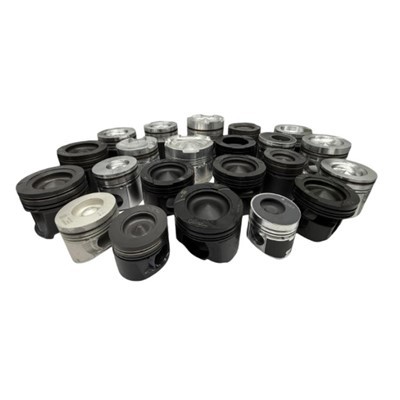
As a supplier, we understand the importance of providing consistent and reliable products. Our quality control processes are continuously improved and optimized to keep up with the latest technological advancements and industry standards.
Contact Us for Purchase
SDEC Piston If you are in the market for high – quality SDEC pistons, we invite you to contact us for a purchase discussion. Our team of experts is ready to answer your questions and provide you with detailed information about our products and services. We are committed to providing you with the best solutions for your piston needs.
References
- ASM Handbook Volume 2: Properties and Selection: Nonferrous Alloys and Special – Purpose Materials
- Automotive Engine Design by Gordon P. Blair
- Precision Machining Technology by John A. Schey
Hebei Yuwei Piston Co., Ltd.
As one of the most professional sdec piston manufacturers and suppliers in China, we’re featured by quality products and good service. Please rest assured to buy customized sdec piston made in China here from our factory. Also, quotation is available.
Address: Beizhujiacun Village, Sujiuzhuang Town, Ningjin County, Xingtai City, Hebei Province
E-mail: jack@ywpiston.com
WebSite: https://www.ywpiston.com/
