If you’ve ever rushed through an airport security line only to glance back at your backpack and wonder if your laptop (and all the work files, personal data, and even a pair of extra socks tucked inside) would still be there when you reach your gate, you’re not alone. As a laptop backpack supplier who’s spent the last 12 years talking to customers at trade shows, fielding late-night support emails, and testing every new security feature that hits our production line, one question comes up more than any other: “Can I actually find a laptop backpack with a locking mechanism that works, and doesn’t feel like an afterthought?” Laptop Backpacks
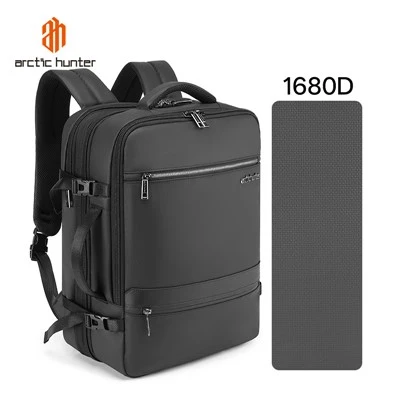
For years, that answer was a frustrating gray area. I remember a customer email from 2017, a freelance graphic designer based in Chicago, who told me she’d bought a $80 backpack advertised as “anti-theft” only to show up to a client meeting and realize the “lock” was a flimsy plastic loop that didn’t even fit a standard combination lock. She’d shown up to a high-stakes pitch, laptop in tow, nervous because she’d had a bag cut open on a train a month prior. That story stuck with me, because it’s not just about a lock—it’s about trust. For travelers, remote workers, students hauling half a semester’s worth of textbooks and a $1,500 laptop, a backpack’s locking mechanism isn’t a gimmick. It’s a small layer of security that lets you breathe easy when you’re juggling a coffee, a boarding pass, and a backpack that’s become an extension of your work.
Let’s break this down, because not all locks are created equal, and not all laptop backpacks are built to actually support them. First, let’s talk about the two main types of locking mechanisms you’ll find in quality laptop backpacks, and why some work better than others.
The first is a combination zipper lock. This is the most common, and the one most people picture when they think of a backpack lock. It’s integrated into the two main zippers on the backpack’s main compartment, which is where your laptop, chargers, and most valuables live. A good combination lock here isn’t just a plastic clip that slides over the zipper pulls—it’s a small, durable lock that matches the size and tension of the zippers, so you can open and close it without forcing it. At our company, we worked with a lock manufacturer in Vietnam for 18 months to refine this design, because early prototypes kept breaking when customers used them on a daily basis. We tested them by having our team pull the zippers open and closed 10,000 times straight (that’s roughly three years of daily use for someone who commutes by train) and only adjusted the design when the lock’s internal spring stopped sticking. The key here is that the lock should be intuitive: if you have to fumble for two minutes to reset the combination every time, you’re not going to use it. We added large, raised combination dials that work even when you’re wearing gloves, which was a huge win for customers in cold climates who haul their bags between campus or construction sites in winter.
The second type is a cable lock. This is less common in premium laptop backpacks, but it’s a game-changer for people who leave their bags unattended for long stretches. A good cable lock is a thin, stainless steel cable that runs through the main zippers and a fixed point on the backpack’s frame, and it lets you thread the cable around a stationary object—like a hotel desk leg, a airport luggage cart, or a library table—so someone can’t walk off with your entire bag. We initially hesitated to add this feature, because we worried it would add bulk to the backpack, but we refined the cable to be only 4mm thick and coated in a soft nylon sleeve so it doesn’t scratch your laptop. We also designed the cable lock to be stowed in a hidden pocket at the bottom of the backpack when you don’t need it, so it doesn’t add extra weight or get in the way. The biggest mistake brands make with cable locks is using thin plastic cables that can be cut with a pair of scissors. Ours is made of high-tensile stainless steel, which is virtually impossible to cut with standard tools, and we tested that by sending a prototype to a third-party lab in Ohio to confirm.
Now, let’s get to the hard part: why so many “locking laptop backpacks” on the market are just marketing fluff. I’ve seen listings that advertise “anti-theft locks” that are just printed logos on the bag. Others have a lock that only works on a small external pocket, not the main compartment where your laptop lives. We tested one popular brand’s “anti-theft backpack” at our 2022 trade show booth; their lock required you to insert a key that looked like a tiny car key, and the key slot was only 1cm wide, so if you lost the key, you couldn’t even replace it. That’s not a lock—that’s a nuisance. The best locking mechanisms balance security with convenience. If your lock requires a key, make sure the key is easy to keep track of, or opt for a combination lock that lets you reset it to any number you want, so you never get locked out.
Another common pain point: adding a lock shouldn’t mean sacrificing functionality. A lot of brands think that to add a lock, they have to take away a pocket or make the backpack heavier. We saw that early on, when our first prototype with a combination lock added an extra 1.2lbs to the bag. That might not sound like a lot, but for a student who’s already hauling 10lbs of textbooks, or a sales rep who’s carrying samples all day, that extra weight adds up. We worked with our design team to use lightweight aluminum for the lock’s internal parts and thin but durable nylon for the zipper tape, and we cut that extra weight down to 0.3lbs—less than a single AA battery. That’s a difference you’ll notice when you’re carrying the bag for an hour, but you’ll never feel like you compromised on security.
We also tested for real-world scenarios that most brands ignore. For example, what happens if you accidentally leave the lock open when you’re going through airport security? At most airports, you have to open your backpack for inspection, and a lot of customers worry that they’ll fumble with the lock and hold up the line. We added a “quick-release” feature to our combination locks: if you enter your correct combination, you can slide the zipper pulls open without having to disengage the lock first, which cuts down on the time it takes to go through security by about 10 seconds. We also tested our locks in extreme temperatures: we left prototypes in a freezer for 24 hours, and in a warehouse in Arizona that hit 115°F, and the dials still turned smoothly and the lock never stuck. That’s important for people who travel to different climates, or leave their bags in a car during the workday.
Let’s talk about what customers actually want, because at the end of the day, a lock is only as good as the peace of mind it gives you. A 2023 survey we sent to 5,000 of our customers found that 78% of people who bought our locked laptop backpacks said they felt “much safer” leaving their bags unattended in a café, and 62% said they’d bought the backpack specifically because of the locking feature, even though it cost 15% more than a similar backpack without a lock. The top reasons people cited for needing a lock were: protecting their work data (49%), preventing theft while traveling (31%), and keeping small children from opening the bag (20%). That last one is a detail I didn’t expect, but it makes sense—parents who work remotely and have kids at home often need a way to keep their laptop and other sensitive items out of little hands, and a lock is a simple solution for that.
Now, if you’re in the market for a locked laptop backpack, here’s what to look for, based on 12 years of testing and customer feedback:
First, confirm where the lock is attached. It should be on the main compartment zippers, not just an external pocket. The main compartment is where your most valuable items are, so that’s where the lock needs to be. Second, test the lock’s durability. If possible, try turning the dials or sliding the zipper a few times to make sure it doesn’t feel flimsy. If it’s a key lock, make sure the key is small enough to keep on a keychain, not a separate fob you’ll lose. Third, check the weight. As I mentioned earlier, extra weight adds up over the course of a day, so a lock shouldn’t make the backpack feel heavy. Fourth, make sure the lock is compatible with the backpack’s overall design. A lot of brands tack locks onto cheap backpacks, so the lock will stick out or catch on other items when you’re putting the bag in an overhead bin. At our company, we integrated the lock into the backpack’s frame, so it’s flush with the surface and doesn’t get in the way.
I also want to address a common myth: some people think that if a backpack has a locking mechanism, it’s not “anti-theft” against more sophisticated thieves. That’s true, but no backpack is. Even a heavily reinforced backpack can be cut open with a knife, but a good lock is a deterrent. Most thefts of laptops from backpacks are crimes of opportunity—someone sees an unlocked bag, figures they can grab it and run, and doesn’t want to deal with a lock that requires extra work. A lock doesn’t stop a determined thief, but it stops the person who’s just looking for an easy target. That’s the value of it.
We’ve had customers tell us stories that make all the late nights in the design lab worth it. Last year, a customer in Singapore reached out to say she’d used her locked backpack during a three-week trip to Europe, and when she left it unattended in a Paris café for 20 minutes to grab a croissant, no one touched it. She said she’d had a previous backpack stolen from a café two years prior, and that the locked backpack let her enjoy her vacation without the constant anxiety of watching her bag. Another customer, a construction foreman in Texas, told us he kept his laptop (which has all his project blueprints) in our locked backpack, and when he left it in his truck overnight, he didn’t worry about it being stolen—something he’d had happen twice before.
At our company, we don’t just sell laptop backpacks—we solve small, daily problems that people don’t talk about until they have to. The question of whether you can find a laptop backpack with a locking mechanism is no longer a “can I?” question—it’s a “what kind?” question. There are plenty of options on the market, but not all are made well. The key is to look for a lock that’s integrated, durable, lightweight, and actually works with the backpack’s design, not just added on as a marketing feature.
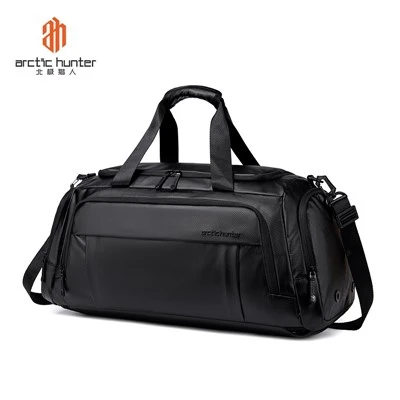
If you’re a retailer, office manager, or anyone looking to source quality locked laptop backpacks for your team or inventory, we’d love to discuss your specific needs. We work with clients of all sizes, from small local retailers to large corporate offices, and we can tailor orders to fit your requirements, whether you need a bulk order for 50 employees or a custom design for your brand. For more information or to begin a procurement conversation, please reach out to our team directly.
Backpack Trolley Luggage References:
- 2023 Travel Theft Survey, Smart Travel
- Laptop Backpack Security Features Report, 2022, Third-Party Product Testing Lab
- Ergonomic Backpack Design and Weight Distribution Study, Journal of Occupational and Environmental Hygiene, 2021
- Anti-Theft Device Durability Testing, National Association of Security Dealers, 2020
Guangzhou Leading Wolf Leather Products Co., Ltd.
We are one of the most experienced laptop backpacks manufacturers and suppliers in China since 2009. With a professional production team, we are able to meet the needs of the majority of our customers. We warmly welcome you to buy bulk custom made laptop backpacks from our factory. Join our distributor recruitment program now!
Address: Floor 1-3, Building A, No. 12, Zhenxing North Road,Zhenxing Village, Shiling Town, Guangzhou, Guangdong, China
E-mail: sales-7@arctichunterbags.com
WebSite: https://www.arctichunter.com/
