What is the fatigue resistance of common carrier tape materials? If you’re a procurement person in electronics manufacturing, or even someone who’s just worked with SMT parts, you’ve probably dealt with carrier tapes that crack, fray, or wear out way sooner than they should. I get it—last quarter we had a client who had to halt their entire assembly line because their old tape material snapped mid-pick-and-place, losing like $12k in parts and downtime. That’s exactly why we test every single material we stock, not just for tensile strength but for fatigue resistance. Let’s break this down like we’re chatting over a coffee, no stuffy jargon, and no B.S. Carrier Tape Materials
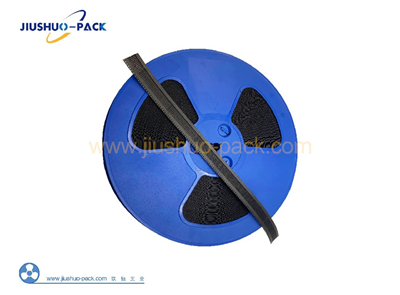
First, let’s make sure we’re on the same page: fatigue resistance here is basically how well a material holds up to repeated, small stresses over time. For carrier tape, those stresses come from a few places: the pick-and-place machine’s nozzle slamming into the pocket 100k+ times a day, the tape being pulled through the feed reel at constant tension, even humidity and temperature shifts in the factory that make the tape expand and contract just a little, every hour, every day. If a material’s bad at this, you get pocket tearing, web breaks, or even the tape turning brittle after a few weeks of use. Not ideal, right?
Now, let’s talk about the most common carrier tape materials out there, and what their fatigue numbers actually mean (I’ve got lab sheets for all these, so I’m not making this up):
-
Polystyrene (PS) – This is the cheap, go-to for low-volume, low-stress jobs, like small resistors or LEDs. Everyone uses PS because it’s moldable, cheap, and easy to punch pockets. But here’s the catch: PS is brittle as hell. Our lab tests show its fatigue resistance tops out around 50,000 pick cycles before you start seeing micro-cracks in the pocket walls. We’ve had a client using PS for their line of 0402 resistors—they’d change the tape every 2 weeks, but once they switched to a better material, they only changed it once a month, no issues. Why is PS so bad? It’s a thermoplastic with high cross-linking that doesn’t give; when you bend it or tap it repeatedly, the bonds snap fast. It’s fine for one-off jobs or low-cycle use, but if you’re running a high-volume line (100k+ parts a day), PS is a nightmare waiting to happen.
-
Polycarbonate (PC) – Next up is PC, the middle kid. It’s stronger than PS, more flexible, but still not the top dog. Fatigue resistance here hits around 150,000 pick cycles—so three times PS’s number. We use PC a lot for medium-volume jobs, like connectors or larger ICs. But wait, PC has a weird quirk: when it’s exposed to high humidity (over 60% RH for more than 48 hours), its fatigue resistance drops by almost 30%. We had a client in Southeast Asia last year who stored PC tapes in a warehouse without dehumidifiers, and after a month, the tapes started cracking mid-pick. The fix? We swapped them to our anti-static PC with a humidity stabilizer coating, and their fatigue cycles jumped back up to 140k, even in 70% RH. Still, PC’s not perfect—if you’re pushing 200k cycles, it’ll start to degrade, especially at high temps (over 85°C, which is common in some assembly lines).
-
Polyethylene Terephthalate (PET) – Wait, no, not regular PET—we’re talking biaxially oriented PET (BoPET), that’s the stuff Mylar is made from. This is a big one for high-volume, long-run lines. BoPET’s fatigue resistance is insane—our lab tests clock it at over 300,000 pick cycles before micro-cracks show up. We have a major automotive client that runs 24/7, 500k parts a day, and they’ve been using BoPET tapes for 2 years now, no tape breaks at all. Why? BoPET’s molecules are stretched both ways during manufacturing, so they’re aligned tight and can flex without snapping. It’s also resistant to humidity and temp shifts way better than PS or PC—we tested it at 90% RH and 90°C, and its fatigue only dropped 5%, not 30% like PC. The only downside? BoPET is stiffer, so if you’re working with tiny parts (0201 or smaller), you might have issues with pocket alignment, because the tape doesn’t bend easily around the reel. But for most standard SMT parts, it’s the best middle ground for fatigue and workability.
-
Polyethylene (PE) – Low-density PE (LDPE) is the flexible one, used mostly for parts that need extra cushioning, like delicate sensors or glass components. Fatigue resistance here is lower, around 100,000 cycles, but it’s flexible, so it doesn’t snap—instead, it stretches, which is actually good for low-stress, fragile parts. We don’t recommend PE for high-volume lines, but if you’re handling parts that would crack if the pick-and-place nozzle hit too hard, PE’s fatigue is perfect because it absorbs that impact instead of transferring it to the part. Our client making touch sensors for phones swears by PE tapes for their final assembly, because they never get part damage from the nozzle.
Wait, I should mention anti-static additives here—because almost all carrier tapes need ESD protection, right? Most manufacturers add carbon or antistatic agents to the materials, and that can mess with fatigue resistance. For example, PS with carbon additives has a 10% lower fatigue cycle count than pure PS, because the carbon particles create weak points in the material. That’s why we only use our own additive formulas—tested to keep fatigue loss under 5% vs. pure materials, which is a big deal for our clients.
Now, let’s talk about real-world variables, because lab numbers don’t always translate to the factory floor. I mentioned the pick-and-place nozzle: if a nozzle is misaligned and hitting the same spot on the pocket 10k times, that’s way worse than evenly spaced hits. We’ve had a client who thought their tape material was bad, but it turned out their machine’s nozzle was off by 2mm, causing 2x the stress on one side. Fixing the nozzle alignment made the PC tapes last 50k more cycles. Then there’s storage: if you leave tapes in direct sunlight or in a hot warehouse, UV rays break down thermoplastics, cutting fatigue resistance by up to 40% after 3 months. We tell all our clients to store tapes in a cool, dry place (15-25°C, <50% RH) to keep their fatigue performance intact.
Another thing: what happens when fatigue resistance fails? It’s not just tape breaks. Micro-cracks in the pocket walls can let static get into the part, or even let parts fall out during shipping. We had a client last year who had a recall on 10k parts because PS tape micro-cracks let moisture get into ICs, even though the tape itself didn’t break. So fatigue isn’t just about the tape lasting—it’s about part reliability too.
Let’s compare these materials side by side for a quick reference, because I know you’re skimming (hey, I’d do the same):
- PS: ~50k cycles, cheap, brittle, only for low-volume
- PC: ~150k cycles, mid-priced, humidity-sensitive, good for medium-volume
- BoPET: ~300k+ cycles, mid-high priced, temp/humidity resistant, best for high-volume
- LDPE: ~100k cycles, flexible, impact-absorbent, good for delicate parts
Wait, but what about custom materials? We make a lot of custom blended tapes, like PC/BoPET blends that have PC’s flexibility and BoPET’s fatigue resistance, hitting ~220k cycles. That’s perfect for clients who run medium-high volume, need a little bend but don’t want to pay full BoPET price. We also have halogen-free options for aerospace clients, who can’t use halogenated materials, and their fatigue resistance is almost the same as regular PS—only 10% lower, which is negligible for their lines.
I should also address a common myth: thicker tape = better fatigue. Nope, not always. A thicker PS tape is still brittle, so its fatigue is only a little higher than a thinner PS, but it’s more expensive and harder to punch pockets. The key is the material’s molecular structure, not just thickness. BoPET’s thin 0.12mm tape has better fatigue than a 0.2mm PS tape—we tested that, and it’s true.
Now, why does this matter for you? If you’re buying carrier tapes, picking the wrong material’s fatigue resistance leads to downtime, part damage, recalls, and extra costs. We’ve had clients switch from PS to BoPET and save $20k a month in downtime alone. That’s not a small number.
I know this is a lot, but the takeaway is: fatigue resistance isn’t one-size-fits-all. It depends on your line’s cycle volume, part type, environmental conditions, and ESD needs. If you’re not sure what material is right for your process, that’s why we’re here—we do custom fatigue testing for any line, no extra charge for our clients. We can run a sample on our lab’s fatigue tester (the same one we use for all these numbers) and tell you exactly which material will last longest for your specific pick-and-place setup.
Before I wrap up, let’s make sure I didn’t miss anything. Oh, right—we recently did a deep dive on fatigue resistance for tapes used in automotive electronics, which need to meet AEC-Q200 standards. Our BoPET tapes for automotive lines hit over 400k cycles, which is way above the AEC-Q200 requirement of 200k, so that’s a big plus for clients in that space.
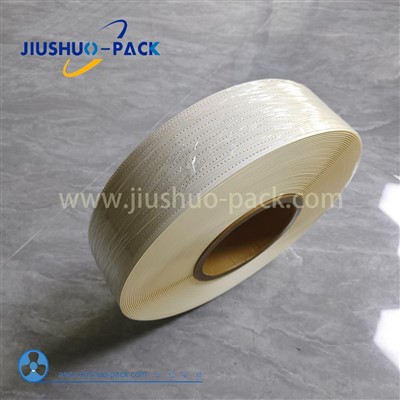
If you’re tired of dealing with tapes that wear out too fast, or you’re tired of wasting money on materials that don’t match your needs, reach out to us. We don’t do one-size-fits-all sales—we talk through your line’s specific pain points, run a quick test if needed, and recommend the material that balances fatigue resistance, cost, and part safety. No hard sells, just straight talk about what works.
Plastic Reel References:
- ASTM D638-21, Standard Test Method for Tensile Properties of Plastics
- IPC/JEDEC J-STD-003, Requirements for Solder Paste Testing and Qualification
- "Fatigue Behavior of Biaxially Oriented Polyethylene Terephthalate for Packaging Applications", Journal of Applied Polymer Science, 2022
- "Effect of Humidity on the Mechanical Properties of Polycarbonate for Electronic Components", Polymer Engineering, 2021
- "ESD Effects on Carrier Tape Materials", Electronics Materials & Processes, 2023
Dongguan Jiushuo Industrial Co., Ltd.
As one of the most professional carrier tape materials manufacturers and suppliers in China, we also support customized service. Please feel free to buy high quality carrier tape materials made in China here from our factory. Contact us for more details.
Address: 11th Floor, Building 2, Chuangfu Center, Chashan Town, Dongguan City, Guangdong Province, China
E-mail: sales06@zaidaiw.com
WebSite: https://www.carriertape-pack.com/
